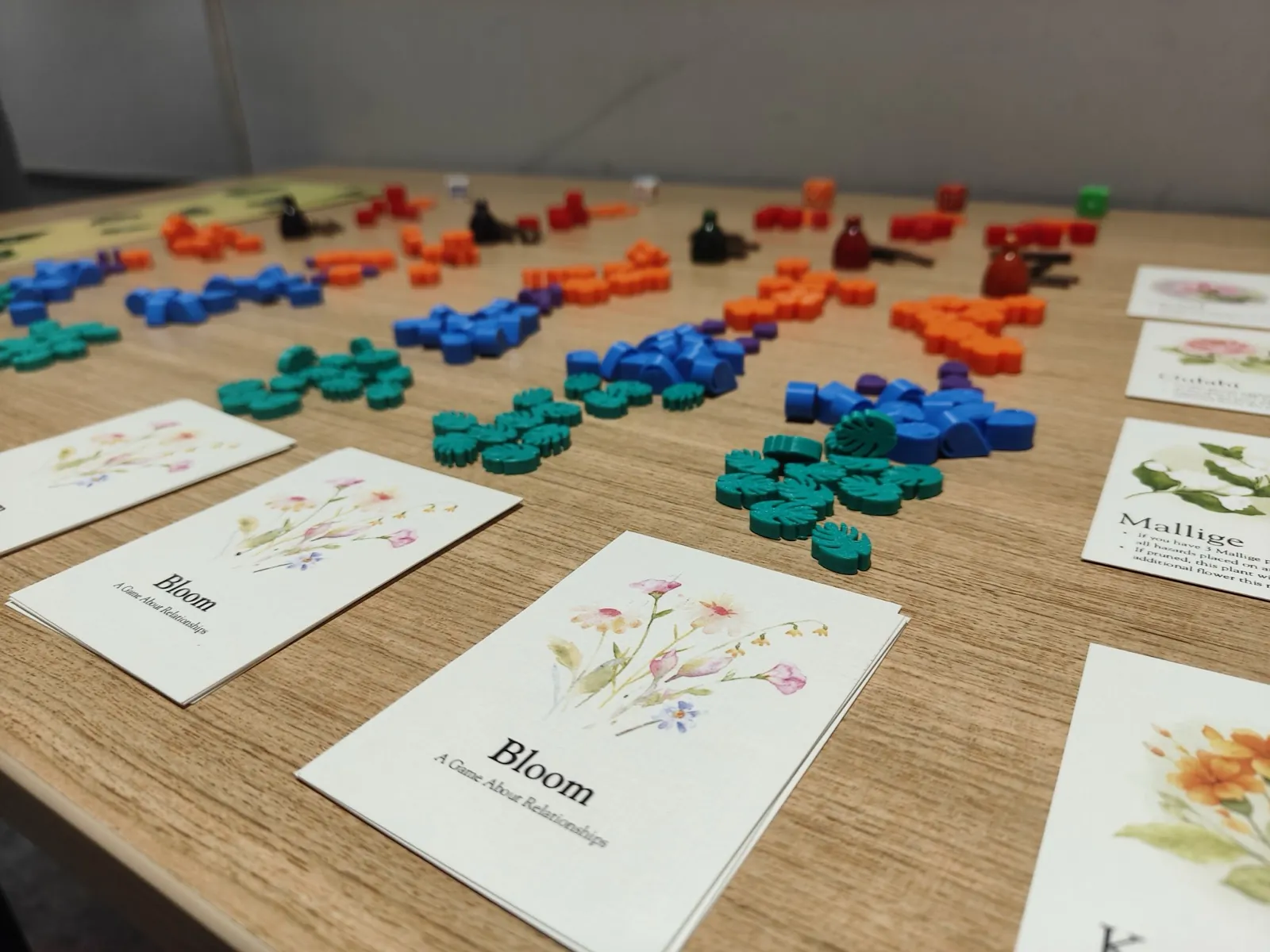
I give everyone a garden and one simple goal: grow the most flowers and win.
Here's what your people work out, usually a round or two too late - the fastest way to a thriving garden isn't guarding your own. It's investing in everyone else's.


 What the game really is
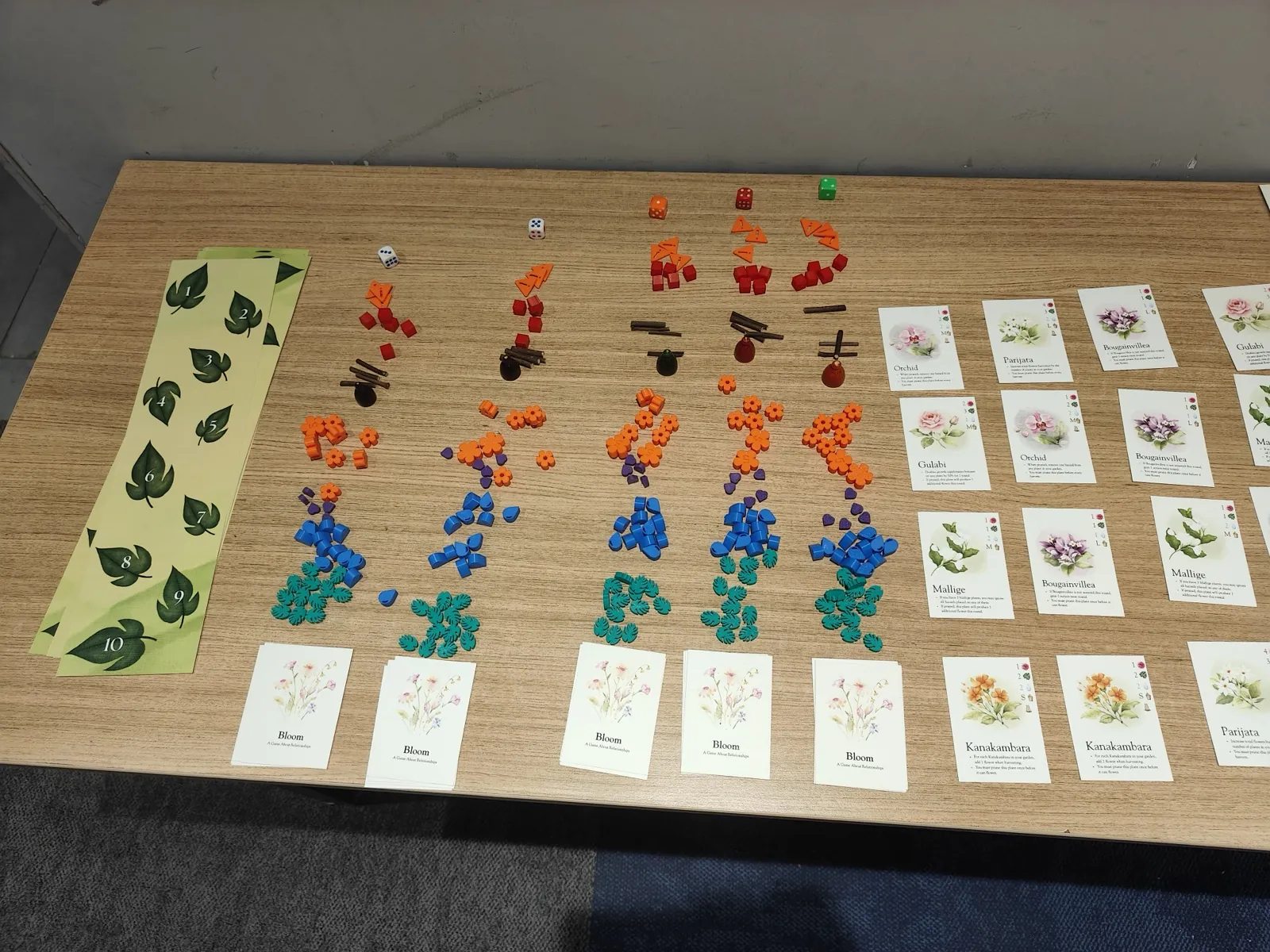
Bloom looks like a friendly garden game. Your people tend their plots, pick up new plants, buy upgrades, and compete to grow the most flowers. On the surface, pure competition.
Underneath, every flower is a different kind of person - and each needs different care. Fertilising, watering, resizing the pot map onto the real moves of managing people: giving attention, giving feedback, giving space. The care that makes one flower thrive will smother another. So players quietly learn to read each relationship and treat different people differently, all while tending the whole network at once.
There's no single way to win, but one truth holds across all of them: investing in others compounds, and hoarding isolates you. The people who guard their patch and refuse to invest reliably fall behind the ones who build relationships and share on purpose. By the debrief, the garden has become a precise mirror of stakeholder management, relationships, and real professional networking.
What Happens in the Room
The first two rounds feel individual. Everyone's head-down on their own garden - planting, upgrading, counting. It looks like a solo puzzle. Then the compounding kicks in.
By round 4 or 5, one or two players have quietly noticed that investing in someone else's garden pays back more than spending the same on their own. Their gardens start pulling ahead. Others see it, shrug it off as luck or better cards, and keep protecting what they've got.
By round 6, the hoarders are doing the maths and realising they can't catch up. Some pivot, but it's late - the relationships they'd need aren't there, because they never built them. By round 7 there's usually one player who tried to win entirely alone. Clean, efficient, solitary game - and near the bottom of the table. I use that player's story in the debrief, always anonymised, to show exactly what transactional thinking costs.
 What it quietly reveals about your leaders
When something valuable is on the line, people show you how they really think about relationships. Here's what surfaces:
- Who makes the first offer, and who waits to be asked - and how long they'll hold out before giving up and going solo.
- The scrupulously "fair" trader who caps their own upside. They swap equal-for-equal, every time, with everyone. Technically fair, strategically stuck - because the best returns come from the asymmetric bets where you give more than you get in the short run.
- Who invests in the people who can't pay them back yet - the newcomer, the one with fewer resources - versus who only cultivates the relationships with obvious near-term upside.
- Whose network holds when the squeeze comes. In the late rounds, as stakes rise, early collaboration gets tested. You'll see clearly who kept their alliances together and who quietly stopped reciprocating the moment it got expensive.
- Who changes course when the evidence is undeniable - and who doubles down on going it alone, because switching would feel like admitting the first approach was wrong.
Every one of these maps straight onto how your leaders manage stakeholders, build influence across the org, and weigh a long-term relationship against a short-term resource grab.
When to Bring This In
- Strong performers just promoted into influence roles - the ones discovering that the authority they had inside their team doesn't travel across functions.
- Technical teams that are brilliant in their lane but cut off from the rest of the org. Bloom makes the cost of that isolation impossible to shrug off.
- Teams who "know" relationships matter but never actually invest. That gap between belief and behaviour is exactly what this closes.
- The session before a 360. Give people a live data point on their own networking patterns before they read what colleagues have to say - the feedback lands very differently.
When This Isn't the Right Fit
- When the networking problem is structural, not behavioural - no cross-functional meetings, no shared platforms, nowhere to connect. Bloom changes behaviour; it can't redesign your org chart.
- Groups under 10. Network effects need density. Below that, the compounding never really gets going and the debrief loses its sharpest comparisons.
- Teams whose relationships are already genuinely healthy. Bloom is diagnostic, not celebratory - it works best when there's something real to surface.
Who It's For
Bloom is built for new managers and leaders who lead through influence rather than authority - people managers, project leads, business partners, and anyone whose success rides on relationships they don't directly control.
It's just as good for technically strong teams who struggle with the relationship side of the work. It makes the value of that investment visible in a way that no amount of "you should network more" ever will.
Case Study
An HR-tech platform: 100% comprehension, 13 of 13 engaged
How Bloom surfaced the stakeholder patterns in one Frontline Manager Program - and sent every single participant home with a committed action plan.
Read the full storyThe moment your people never forget
The first two rounds look like solo games. Everyone focuses on their own garden, makes safe trades, protects what they have. By round four the room splits: the people who invested in others early are compounding returns, and the ones who played alone are falling behind without quite knowing why.
By round six there's usually one player who has tried to win entirely alone - trading only when forced, never investing in anyone. I use that player's trajectory in the debrief (anonymised) to show what transactional thinking costs over time. It's one of the clearest demonstrations in any of my games of how relationship investment compounds.
And the moment almost everyone remembers: realising, too late, that the person they declined to help back in round three is now the one everyone else is lining up to trade with.
Specific Patterns That Surface
- Who offers first, before being asked, versus who waits to receive
- Who invests in the players who can't help them back yet, versus who only trades with the strong
- Who changes strategy when the early plan stops working, versus who holds the line and blames bad luck
- Who tracks what others need and brings it to them, versus who only responds to a direct request
- Whose alliances survive the competitive pressure of the later rounds, and whose quietly dissolve
When to Bring This In
- Frontline managers stepping into roles that need cross-functional influence they don't have yet
- Technical teams who are strong individually but isolated - the game makes the cost of that isolation land in a way no feedback conversation does
- Teams where "you should network more" has been said a hundred times and changed nothing - now they get their own data, not someone else's opinion
- Before a 360 programme, so people arrive already clearer about their own relationship patterns
When This Isn't the Right Fit
- When the networking gap is structural - no cross-functional opportunities exist - rather than behavioural
- Groups under 10, where there isn't enough network density for the dynamics to develop
- When the real need is about authority and decision-making, not influence and relationships - Ripple Effect or Planetfall would fit better, and I'll point you there
Where the real learning lands: the debrief
Every session ends on an EPPA debrief - Experience, Patterns, Principles, Application. Nobody leaves with vague reflections. They leave with one named behaviour to change and one specific situation to use it in. And I run the debrief myself, as the person who watched the whole thing play out - that continuity is what makes it stick.
Go deeper on the ideas behind Bloom
The leadership ideas this game puts into practice, explained in full:
- Stakeholder management for managers - the skill Bloom is built to develop.
- How to build trust on a team - why investing in others compounds.
- First-time manager guide - for new managers learning to lead through relationships.
- The Put The Player First framework - the method behind Bloom and every game we run.
Bring this to your team
Tell me a bit about your leaders and where the relationship gaps are, and I'll tell you honestly whether Bloom is the right fit. No hard sell either way.
What Clients Say
"We'd run leadership workshops before. This was the first time we could actually see how our managers made decisions under pressure. The debrief alone was worth the session."
L&D Head, GCC (India)
"What surprised me was how quickly the room opened up. Within 20 minutes, patterns were visible that hadn't surfaced in six months of 360 feedback. We brought Arvindh back for two more cohorts."
Learning & Development Manager, Manufacturing
"I've sat through a lot of training. This was the first time I left thinking about my own behaviour, not the content on the slides."
Participant, Leadership Development Programme
Let's see if it fits your team
Book a quick discovery call and we'll talk through your team, your goals, and whether this is the right game - no obligation. Prefer to look first? I'll send the facilitation playbooks to your inbox so you can see exactly how it runs.
Book a discovery call WhatsApp Arvindh