
How to Build Trust on a Team: A Manager's Guide
Trust is not a speech you give. It is a balance you build, one small deposit at a time.

Short answer: you build trust on a team by being reliable on small things, by going first with honesty and the odd admission that you're lost, and by investing in your people long before you need anything from them. Trust is the accumulated memory of how you have treated somebody. It compounds when you invest outward. It isolates you when you hoard. There is no shortcut and no grand gesture that does it in one go. There is only the pattern.
Key takeaways
| If you want to | Do this | Why it works |
|---|---|---|
| Be safe to depend on | Keep small promises consistently | Reliability lets people predict you |
| Be safe to be honest with | Go first with vulnerability | You set the ceiling for everyone else |
| Have allies when it counts | Invest before you need anything | Trust built under pressure is too late |
| Actually be fair | Treat different people differently | Each person needs different care |
| Recover from a mistake | Name it, own impact, change behaviour | Repair is proven, not announced |
| Avoid isolating yourself | Stop hoarding info and credit | Self-protection cuts off the people who would back you |
 What team trust actually is
Here's the thing nobody says out loud about trust. It isn't a feeling people decide to have about you. It's a prediction. When somebody trusts you, they are betting that your future behaviour will look like your past behaviour, and that the bet is safe. Every interaction you have ever had with them is the data. Which is why you cannot talk a team into trusting you, and why the off-site and the heartfelt all-hands move nothing. Nobody is listening to what you say about trust. They are quietly keeping score of what you do.
That reframe matters because it tells you where the work actually is. Trust gets built in unglamorous repeated moments. Whether you replied when you said you would. Whether you defended somebody who wasn't in the room. Whether you said "that was my call and it was wrong" out loud. None of those feel important on the day. All of them are the material.
The two ingredients: reliability and vulnerability
Most trust on a team comes down to two things, and they do different jobs. Confusing them is why a lot of well-meaning managers stay stuck.
Reliability makes you safe to depend on
Reliability is just doing what you said you'd do, consistently, especially on the small stuff. Send the note you promised. Turn up on time. Close the loop you opened. Reliability is boring, and boring is the point - it makes you predictable, and predictability is what lets somebody stop spending energy watching you and start spending it on the work. A manager who is brilliant but erratic is exhausting to work for. Nobody ever puts their guard down.
Vulnerability makes you safe to be honest with
Reliability on its own gives you a team that depends on you and tells you nothing. The second ingredient is vulnerability. Saying "I don't know", "I got that wrong", or "I need help" out loud, first, before anybody else has to take the risk. When the most senior person in the room admits a gap, they set the ceiling for how honest everybody else is allowed to be. When the leader never shows a crack, the team learns that hiding a mistake is the safe move - and you have just lost the early warning system that healthy teams run on.
You need both. Reliability without vulnerability gives you a competent team that does not tell you the truth. Vulnerability without reliability gives you a likeable manager nobody can count on. Trust lives where the two overlap.
Invest in relationships before you need them
Here's the mistake almost everybody makes. They go looking for trust at the exact moment they need it. The deadline is on fire, the reorg is coming, the hard feedback is due... and suddenly the manager would like some goodwill please. But trust drawn in a crisis was never deposited. You cannot withdraw from an account you never paid into.
The leaders people walk through walls for did the opposite. They invested when nothing was at stake. A real check-in on a slow Wednesday. Credit handed over with no audience watching. A favour done with no scoreboard anywhere. Those deposits sit in the account quietly compounding, and then the hard day arrives - it always arrives - and there's a balance to draw on. Relationship-building is a peacetime activity. It is not a tool you reach for in a war.
This is also the single behaviour that scales. Investing in one person well teaches you how to invest in the next, and the goodwill you build with one teammate is often visible to others. It is a lever, not a one-off rock to move. The more you do it, the more the returns stack, which is exactly why it is worth doing before you can point to a reason.
A game that makes this visible. I built a serious game called Bloom around exactly this. Players tend a garden where every flower is a person and every flower wants something different. Sun. Shade. To be left alone for a week. You cannot win by treating them all the same, and you cannot win by hoarding water for the flowers you happen to like. Invest early, spread the care, and the whole garden compounds. Hoard, and you finish with three magnificent plants standing in a dead bed. It's trust-building you can watch happening on a table in real time. And the debrief is the bit where a manager goes quiet, because they have just realised they have been gardening their actual team the same way.
Treat different people differently (that is what fair means)
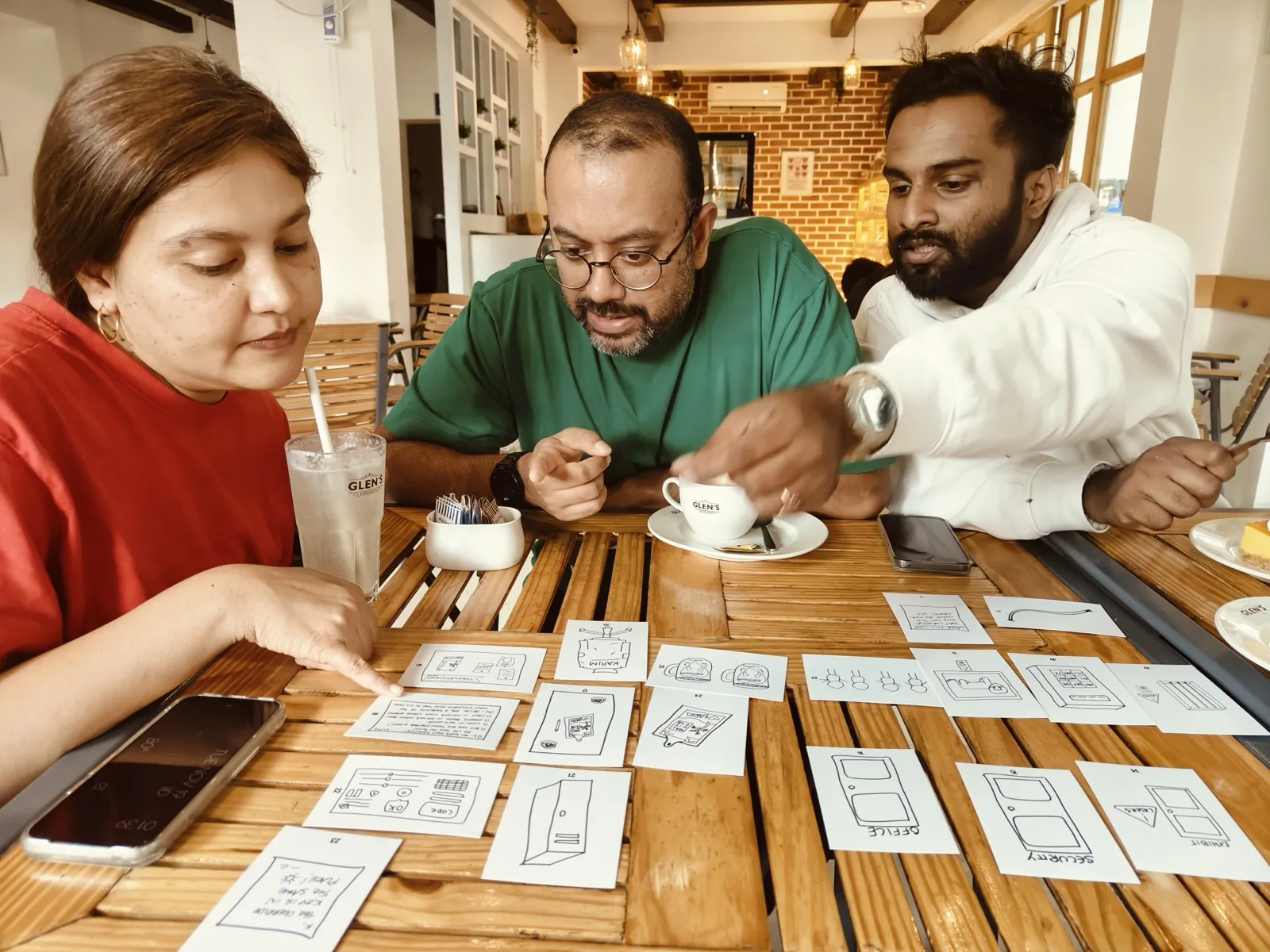
Plenty of managers think fairness means treating everybody identically. It's a trap. Identical treatment feels safe and defensible and it means treating most of your team slightly wrong. One person trusts you more the moment you back off and stop checking in. Another reads that same silence as abandonment. One wants the credit said out loud in front of everyone. Another would be mortified and just wants a quiet word by the lift.
Fair does not mean same. Fair means each person gets what they actually need, openly, and consistently enough that nobody suspects favouritism. That requires you to know your people as individuals, which is slow work and exactly the kind most managers skip. The reward is that trust stops being generic. It becomes specific to each relationship, which is the only kind that holds up under pressure.
 How to repair trust when it breaks
You will break trust. Everyone does. A missed commitment, a defensive reaction, a decision that landed badly. What separates managers who recover from those who slowly bleed out their team is how they repair. There is a sequence that works, and it is mostly the last step.
- Name the specific thing. Not "if anyone felt let down." The actual thing: "I said I would back you in that meeting and I went quiet." Vague apologies signal you are managing your own discomfort, not theirs.
- Acknowledge the impact. Say what it cost them, in their terms. This shows you understand the damage rather than just wanting to be forgiven for it.
- State what changes. One concrete, observable thing you will do differently. Keep it small enough to actually keep.
- Then prove it, over time. This is where repair actually happens. The apology only opens the door. A visible pattern of different behaviour is what rebuilds the balance you spent. Words reset expectations; behaviour resets trust.
The common failure is treating the apology as the repair. It is not. It is the announcement of an intention to repair. If the behaviour does not change, the apology makes the next breach worse, because now you have spent words too.
Why hoarding and self-protection isolate you
When trust feels shaky the instinct is to protect yourself. Hold the information close. Take the credit so your value is undeniable. Keep the options open. Reveal as little as possible. It feels like the smart play. It is the most reliable way I know of ending up alone.
Every act of hoarding sends a signal: this relationship runs one way. When you withhold information, people stop sharing theirs. When you absorb credit, people stop putting their best work near you. When you never go first, nobody goes at all. Self-protection trains the people around you to protect themselves from you, and the slow result is a manager surrounded by compliant, guarded individuals and no actual team. The people who could have backed you when it mattered no longer have a reason to.
The counter-move is the harder, better bet. Invest outward even when it feels risky. Give the credit away. Share the context. Go first. Investing in people compounds, and it builds a team that catches you when you fall. Hoarding isolates, and it builds a fortress you end up defending on your own. Both of those are choices you make in tiny moments every single day.
A simple way to think about all of this
This is the heart of what I call putting the player first. You build the strongest position for yourself by genuinely investing in the people around you, not by optimising for your own protection. Trust is the cleanest example there is. The manager who plays to make their people succeed ends up with a team that makes them succeed back. The one who plays to protect their own standing ends up defending it alone. Make the outward investment your default, especially on the ordinary days when nothing is on the line. That's it. That's the whole skill.
Get tools for building stronger teams by email
One short email when I've got something worth your time. A new game, a debrief technique, or a look behind the curtain at a real session on trust, leadership and team dynamics.

Frequently asked questions
Basics
How do you build trust on a team?
By being reliable on small things, going first with honesty and vulnerability, and investing in your people before you need anything from them. Trust is the accumulated memory of how you have treated someone, so it is built in ordinary moments, not declared in meetings.
What are the two main ingredients of trust at work?
Reliability and vulnerability. Reliability is doing what you said you would do, so people can predict you. Vulnerability is admitting you do not know and asking for help, so people can be honest with you. Reliability makes you safe to depend on; vulnerability makes you safe to be honest with.
Timeline
How long does it take to build trust on a team?
Trust builds slowly and breaks fast. It accumulates through repeated small interactions, so there is no fixed timeline. Think of it as compounding: each kept promise adds to a balance that grows over months, and a single act of self-protection can spend a lot of it at once.
Fairness
Should you treat everyone the same to be fair?
No. Fair does not mean identical. Different people need different things to feel trusted: autonomy, check-ins, public credit, or private reassurance. Treating everyone the same usually means treating most people slightly wrong. Fairness is giving each person what they actually need, openly and consistently.
Repair
How do you repair trust after you have broken it?
Name the specific thing you did without excuses, acknowledge the impact, say what you will do differently, then prove it through changed behaviour over time. Repair is mostly that last part. The apology opens the door; a visible pattern of different behaviour rebuilds the trust you spent.
Why does hoarding information or credit destroy trust?
Hoarding signals you are protecting yourself rather than investing in the team. When you withhold information, credit, or help, people learn the relationship runs one way and stop investing back. Self-protection feels safe but it isolates you from the people who could have backed you.
Related reading
- The Put The Player First framework
- Bloom: the serious game about investing in different people
- Serious games for leadership development: the complete guide
With love from Bengaluru, this is Arvindh saying over and out.