
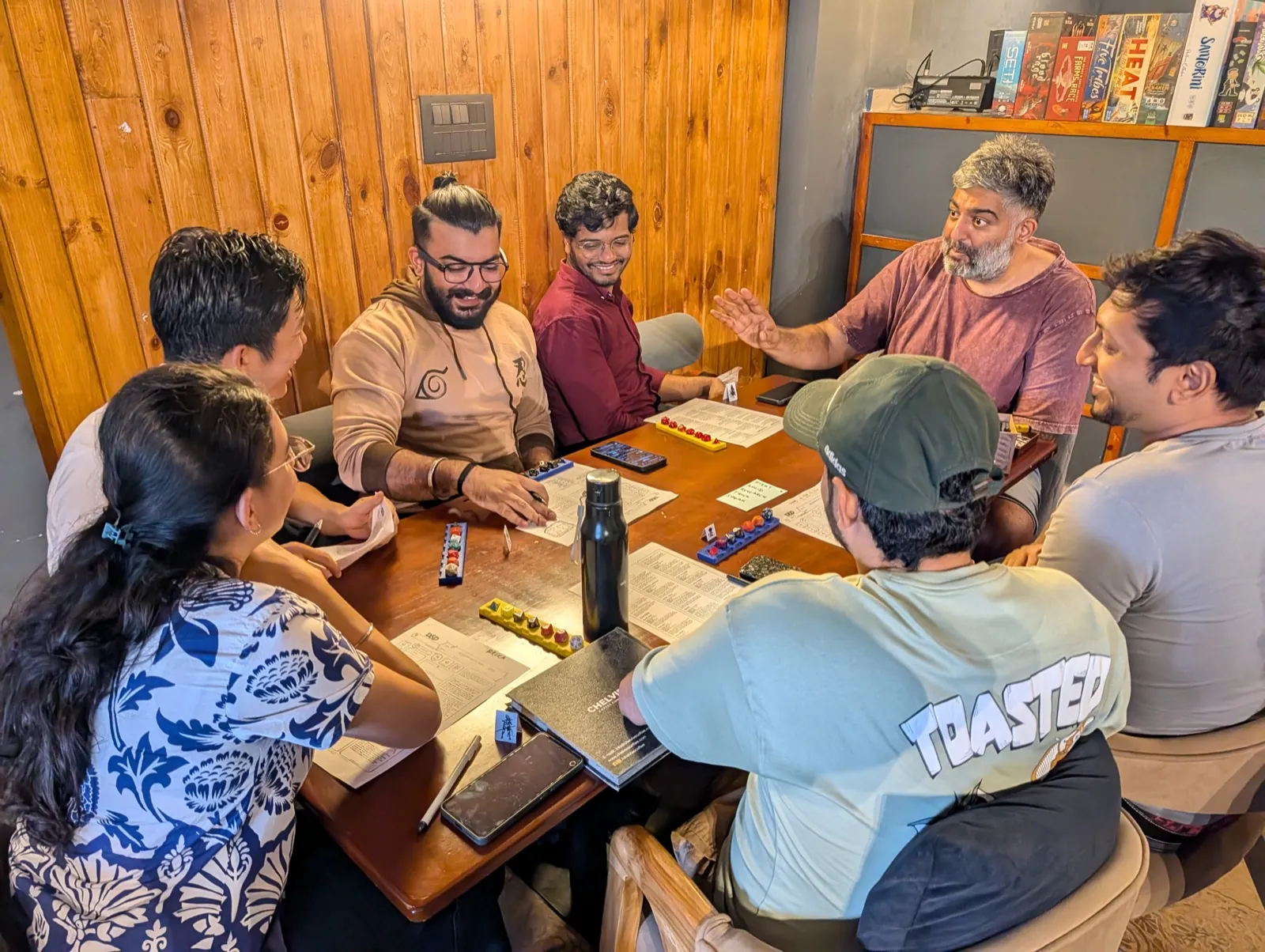
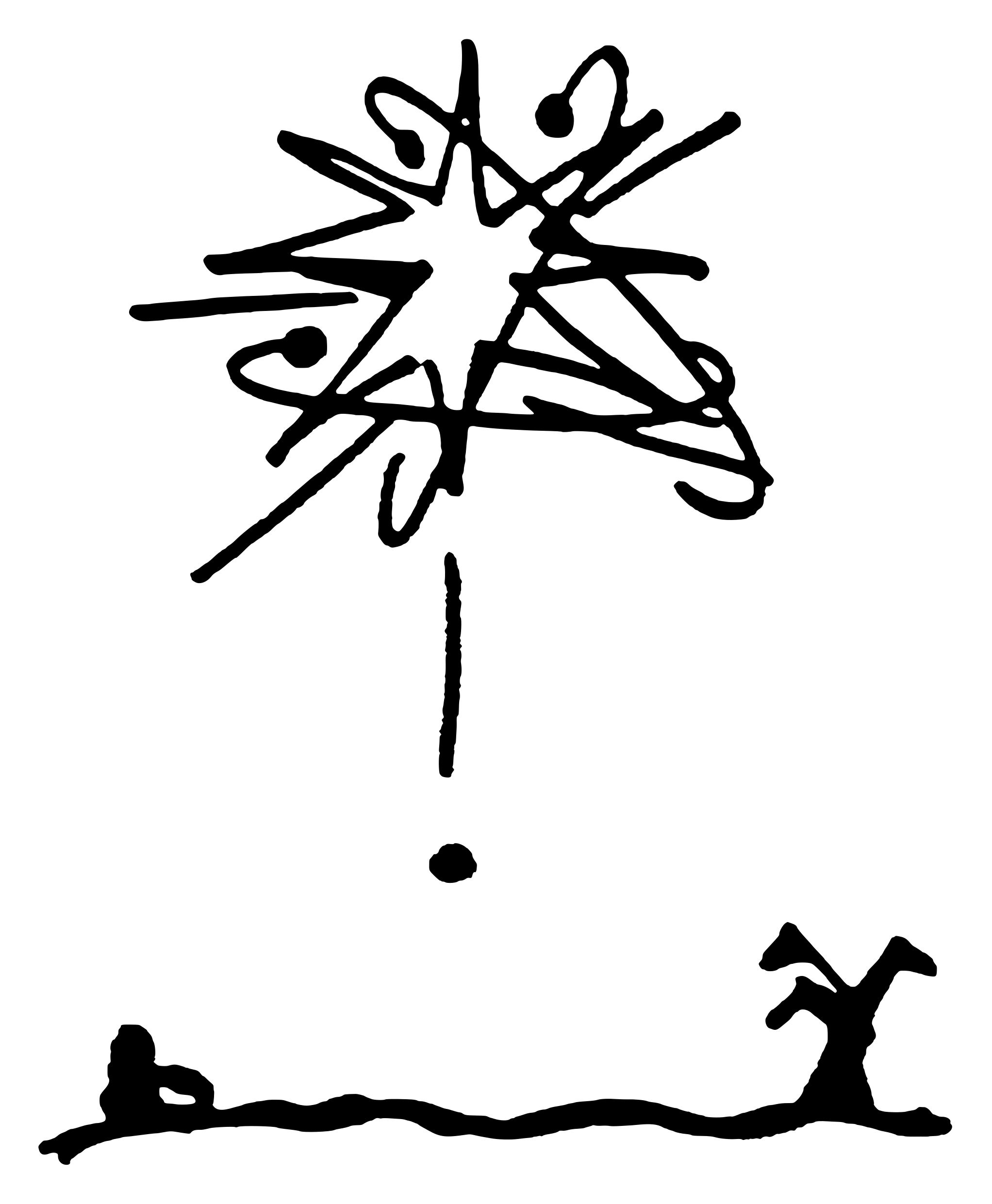
In Planetfall, your leaders are trying to land a spaceship on an alien world - with incomplete information and atmospheric conditions they can't be sure of until it's almost too late.

 How it works
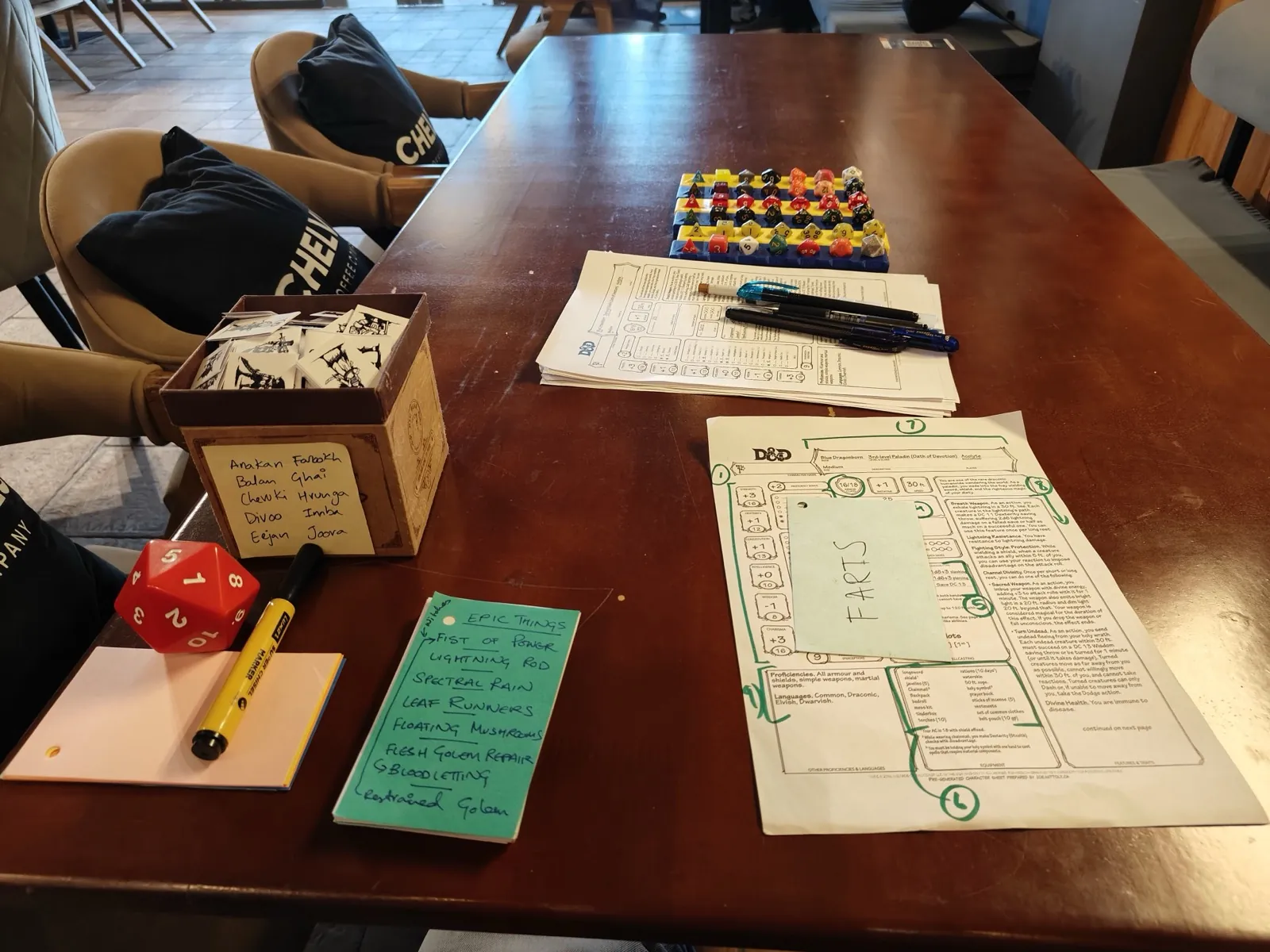
Each team travels to unknown planets and tries to land safely. Every round, they spend their turn on one of three moves: fire a probe to research the atmosphere, process the data they've already gathered, or build a ship upgrade. They test, learn, and adapt as new information lands. There's deliberately no single right answer - which is exactly what forces disciplined experimentation instead of guesswork.
The muscle it builds is learning agility: read new data, update fast, and act before you have certainty. People walk out with a repeatable process for situations they can't control - the same thing leading through change demands of a team every day.
 What it reveals under uncertainty
When nobody has the full picture, real behaviour comes out:
- Bold experimenters versus cautious ones - who probes to learn, and who freezes waiting for a safer moment that never comes.
- Who updates when the evidence contradicts their assumptions - and who quietly clings to the plan they've already committed to.
- How each person meets ambiguity - reaching for control, or leaning into exploration.
- Whether the team can build a shared picture from incomplete data - or fragments into people quietly working from different maps.
In the debrief I connect what I saw to the real work: change management, decision-making under uncertainty, and building a culture that learns from failure instead of hiding it.
Who It's For
- Leaders in fast-changing environments
- Organisations moving through transformation
- Teams stepping into new markets
- High-potential cohorts - where learning agility is exactly what you're trying to measure
What Happens in the Room
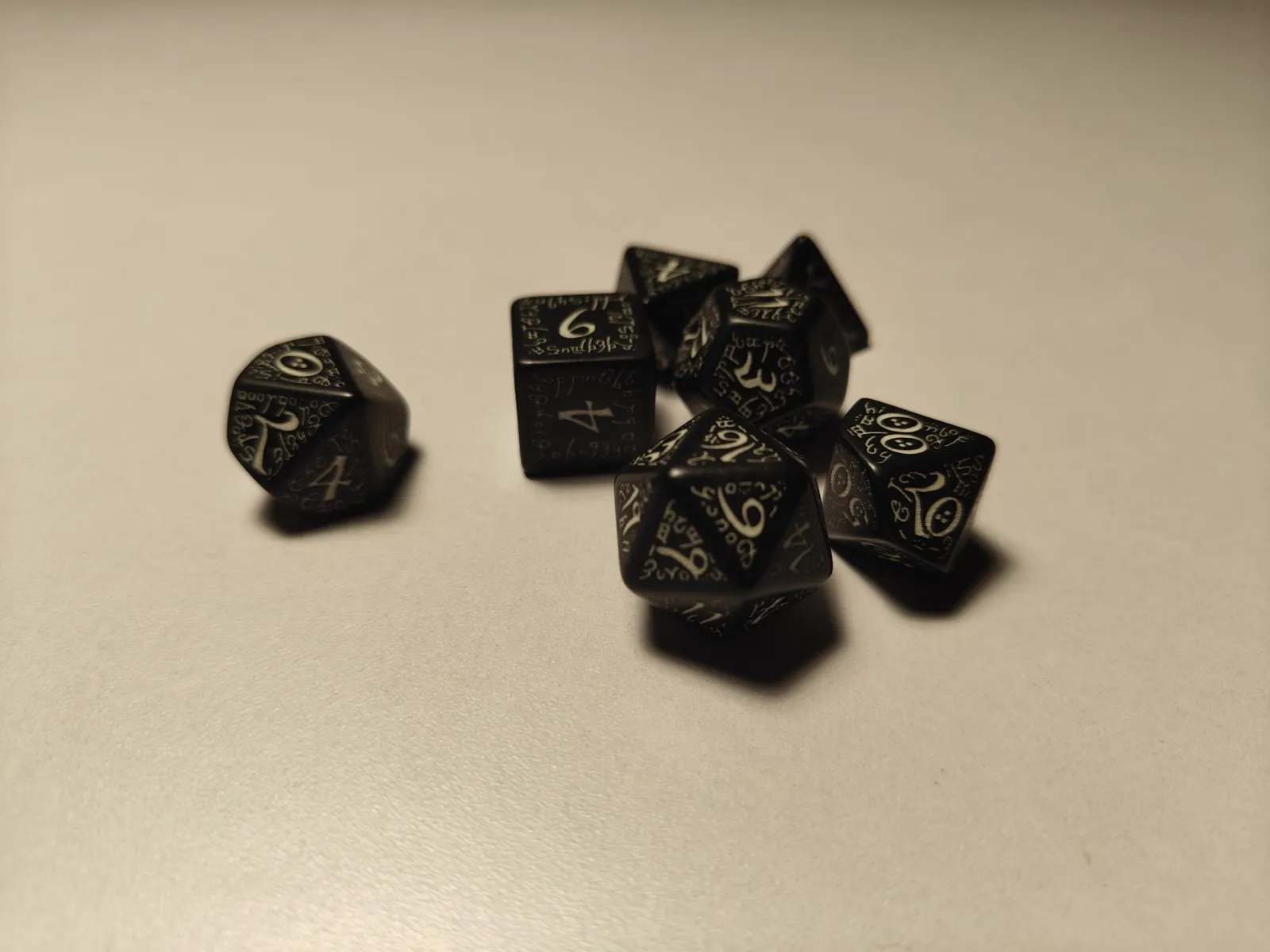
Everyone arrives with a plan. By round two, that plan is wrong. Now the group has a choice: hold the course or adapt - and most split right down the middle. Some dig in ("we committed to this, we don't have enough data yet"). Others want to change immediately. A few go quiet and wait to see which way the room leans.
The groups that struggle most are the ones that can't make the meta-decision: when do we stop debating and act? They reach a position too late, having spent their whole window arguing. The groups that fly either have one strong adaptor who reframes the situation early, or they set a fast decision protocol in round one that they can reach for every time conditions shift again.
Here's the part leaders remember: most people walk out of this with a clearer read on their own bias - toward action or toward analysis - than any psychometric has ever given them.
Specific Patterns That Surface
- Who changes course fast when conditions shift, and who defends the first decision well past its sell-by date
- Who surfaces new information to the group straight away, versus who sits on it and processes privately first
- How the group handles disagreement about direction - a clear decision, a slow drift, or one person deciding while everyone else goes along
- Who acts on incomplete information, and who keeps waiting for a certainty that never arrives
- Whether the team's decision speed holds across rounds, or degrades as the pressure piles up
When to Bring This In
- Strategy offsites, where the team needs to talk about how they handle uncertainty before committing to an actual strategy
- Organisations in rapid change where "we need more information before we can decide" has become the default reflex
- Leadership programmes on agility, resilience, or leading through ambiguity - it gives people real data about their own patterns instead of a self-reported guess
- Teams whose post-mortems keep landing on "we knew conditions had changed but stuck with the plan anyway"
When This Isn't the Right Fit
- Groups under 8 - the dynamics need enough people to generate visible splits in approach
- Leadership teams whose real challenge is political, not cognitive - Ripple Effect or Welcome to Zombiepuram would surface more of what matters, and I'll steer you there
- When the true issue is decision authority (who gets to decide?) rather than decision quality (how do we decide well?) - a game won't fix a structural clarity problem
Where the real learning lands: the debrief
Every session ends on an EPPA debrief - Experience, Patterns, Principles, Application. Nobody leaves with vague reflections. They leave with one named behaviour to change and one specific situation to use it in. And I run the debrief myself, as the person who watched the whole thing unfold - that continuity is what makes it stick.
Straight answers about Planetfall
How is this different from a standard business simulation?
Most business sims score the outcome - did your team make the right call? Planetfall watches the process - how did your team behave the moment the right call stopped being obvious? In the debrief I reconstruct the decision points rather than tally results, which is where the real leadership learning lives.
Can it run with groups who've played simulations before?
Absolutely. People who've played other games often go deeper - they're past the mechanics and much better at noticing their own patterns. It doesn't need novelty to work.
What if the group is very senior - C-suite or close?
Senior rooms often give me the richest data. The patterns that made someone successful early in their career can quietly become liabilities at the top. Planetfall makes those hardened habits visible in a way a 360 struggles to, because people feel the consequence of the pattern instead of just hearing about it.
How many rounds does it run?
A 2-hour session usually runs 3-4 rounds, with a condition change between each. Every shift is another chance to notice, and adjust - or not.
Bring this to your team
Tell me who's in the room and what you're trying to shift, and I'll tell you honestly whether Planetfall is the right fit. No hard sell either way.
Go deeper on the ideas behind Planetfall
The game is one way to build the behaviours behind agility and change. These go deeper on the thinking it puts into practice:
- How to be more adaptable as a leader
- Change management for managers
- Decision-making under uncertainty
- The Put The Player First framework - the design engine behind every game
- Decision Labs - consequence-based environments where leaders practice on real-time systems
What Clients Say
"We'd run leadership workshops before. This was the first time we could actually see how our managers made decisions under pressure. The debrief alone was worth the session."
L&D Head, GCC (India)
"What surprised me was how quickly the room opened up. Within 20 minutes, patterns were visible that hadn't surfaced in six months of 360 feedback. We brought Arvindh back for two more cohorts."
Learning & Development Manager, Manufacturing
"I've sat through a lot of training. This was the first time I left thinking about my own behaviour, not the content on the slides."
Participant, Leadership Development Programme
Let's see if it fits your team
Book a quick discovery call and we'll talk through your team, your goals, and whether this is the right game - no obligation. Prefer to look first? I'll send the facilitation playbooks to your inbox so you can see exactly how it runs.
Book a discovery call WhatsApp Arvindh