
Welcome to Zombiepuram
A six-hour mega-game of negotiation, influence and coalition-building, set in post-apocalyptic Bangalore - where the leadership politics your people usually keep hidden play out in the open.
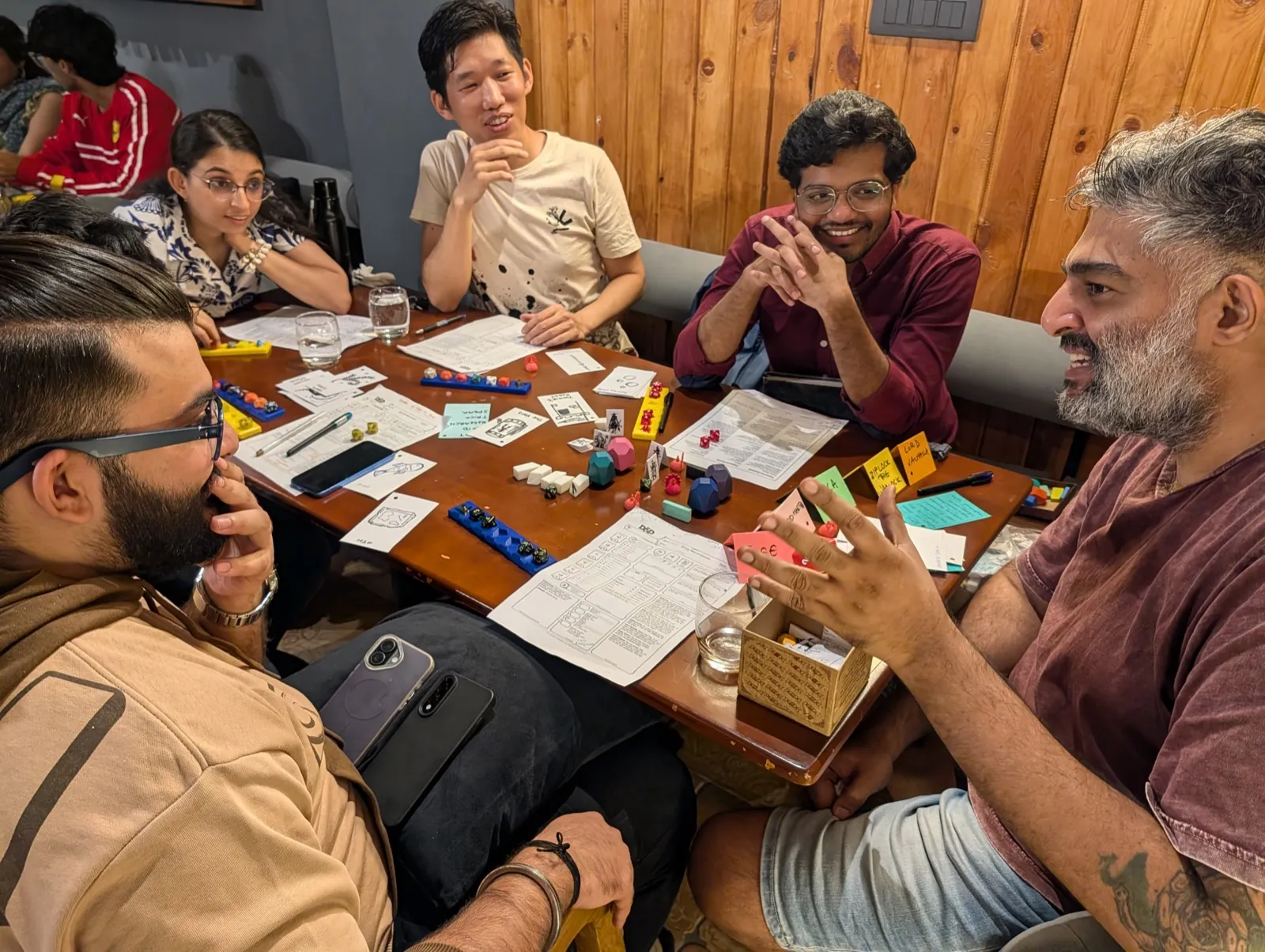
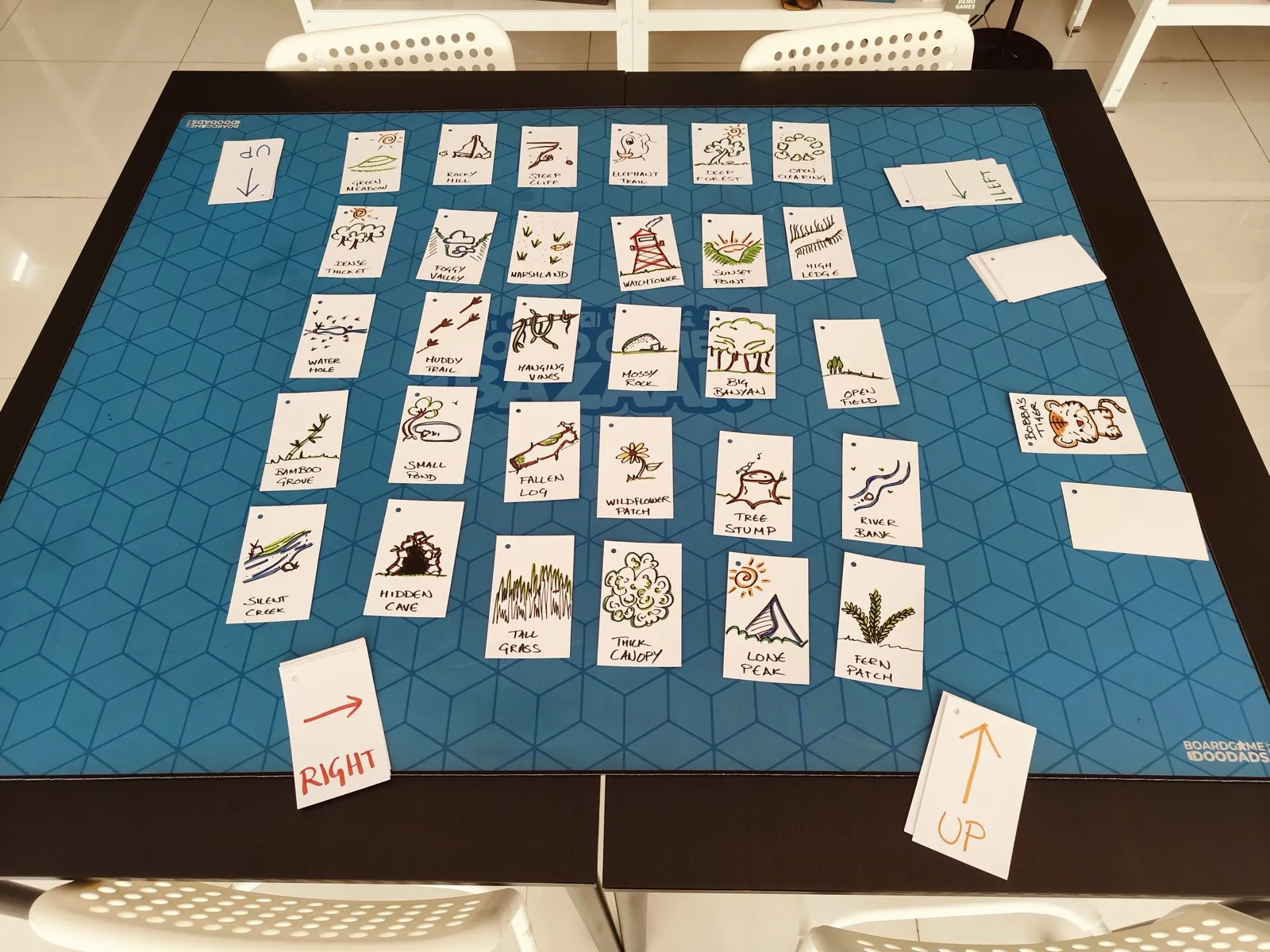
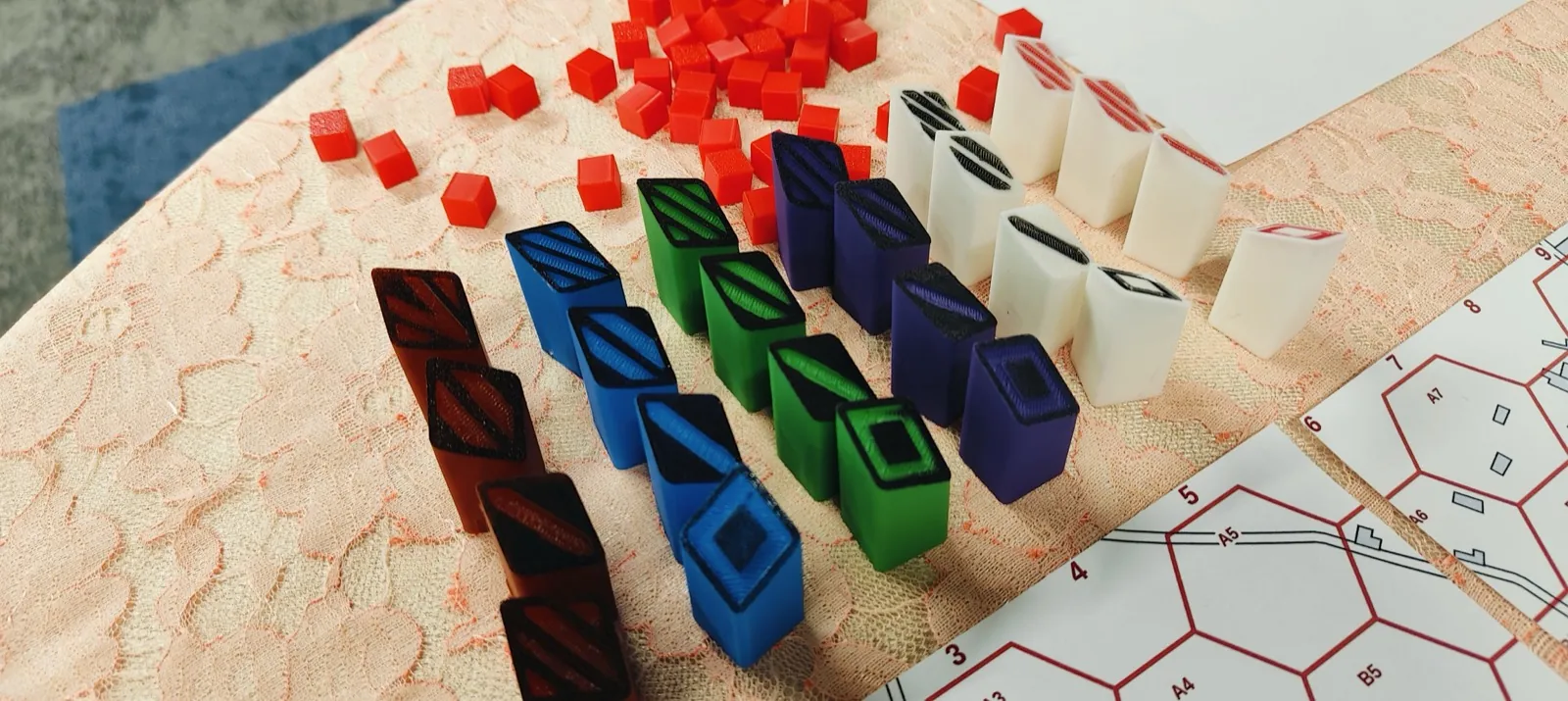
Welcome to Zombiepuram is my flagship mega-game, built to run a whole room at once. Your people split into factions trying to survive in a post-apocalyptic Bangalore. Each faction holds PUBLIC goals its members can see - and every member also carries PRIVATE goals nobody else knows about. It all plays out across a big hex map with resources to control, trade and fight over, while my team runs the zombies and the rules of the world. What you get is dense, real political-intelligence work: reading agendas, managing information asymmetry, and deciding who to trust.


 Core Mechanics
The game runs on negotiation, deal-making, alliance-building - and, now and then, alliance-breaking. Factions move across the map, claim and swap resources, and chase both their public mandate and their members' private aims. Nobody holds everything they need, and no faction survives alone. Success comes from influence, not authority - from coalitions, brokering and strategy, not position on an org chart.
 What It Reveals
Under pressure, with incomplete information and competing objectives, people stop performing and start behaving. You'll see who builds coalitions early, who hoards information and who shares it, who earns trust through action, and who leads without any formal hierarchy to lean on.
Who It's For
Built for mid-to-senior leaders working in the real soup of competing priorities, cross-functional dependencies and political complexity. It's especially strong for leadership teams that need sharper negotiation and better alignment across the organisation. It also doubles as a diagnostic - six hours of real behaviour before you design a larger development programme.
What Happens in the Room
The game runs in phases. Early on, factions meet internally, build a strategy, and make first contact with other groups. The opening moves are tentative - everyone's calibrating who to trust and how much to reveal.
By hour two, alliances are forming. Some are announced, some stay quiet. The central tension is information asymmetry: every faction knows something the others need, and the call of when to share it, with whom, and at what price is exactly where the real leadership behaviour lives.
Hour four is where alliances break, and the cost of earlier decisions comes due. The faction that burned bridges to hit its own goal finds collective action almost impossible when the final phase demands it. And the broker who quietly kept everyone talking? Now the most powerful player in the room - even if they're nowhere near the top on points.
The final phase can't be won without a coalition. The groups that built genuine trust get there. The ones who played it transactional scramble. In the debrief, I connect exactly what just happened to the political landscape your people navigate every single week.
Specific Patterns That Surface
- Who makes first contact across factions early - and whether they lead with an offer or a demand
- Who shares information freely to build trust, versus who hoards it as leverage to deploy later
- Who becomes the broker - holding relationships with several factions at once without getting captured by any one of them
- Whose commitments hold under pressure, and who switches sides the moment their faction's position changes
- How covert or overt the politics get - some groups play in the open, others run parallel conversations the rest of the room never sees
- Whether the group can sustain collective action once individual goals are met, or whether coordination collapses the instant self-interest is satisfied
When to Bring This In
- Senior leadership teams where political dynamics are quietly denting decision quality - the game makes visible what usually stays unsaid
- Post-merger environments where two cultures are still operating as separate camps - the faction structure mirrors the reality exactly
- Organisations where "alignment" conversations keep happening and never resolve - this creates a shared, felt experience of what misalignment actually costs
- As a diagnostic before you design a larger programme - six hours of real behaviour beats any survey
When This Isn't the Right Fit
- Groups under 15 - you need enough people for genuine competing interests and real faction dynamics
- Frontline or junior teams - this is built for people already living in political complexity, and it lands best when they recognise the dynamics
- Anything less than a full day - the 6-hour arc is the product, and half-day versions lose the political depth that makes the debrief matter
Where the real learning lands: the debrief
Every session ends on an EPPA debrief - Experience, Patterns, Principles, Application. Nobody leaves with vague reflections. They leave with one named behaviour to change and one specific situation to use it in. And I run the debrief myself, as the person who watched every coalition form and fracture - that continuity is what makes it stick.
Straight answers about Zombiepuram
Why 6 hours? Can it be shortened?
The 6-hour arc is the product. The political dynamics - how alliances form and fracture, how trust gets built and spent, how individual and collective interests collide - need time to develop. Squeeze it into 3 hours and groups are only just grasping their strategic position when it ends.
What if real political tensions get activated?
The debrief is built for exactly that. I separate what the game surfaced (patterns and tendencies) from what the real workplace holds (history, specific people). Making patterns discussable without making them personal takes the designer in the room, not a licensed facilitator reading from a script - and that designer is me.
Is it right for teams already in conflict?
Depends on the goal. If you want shared vocabulary for talking about the dynamics causing friction, Zombiepuram works beautifully - it moves the dynamics into the game world so they're discussable without being accusatory. If you're trying to resolve one specific interpersonal conflict, a game is the wrong tool, and I'll tell you so.
What seniority is it for?
Mid-to-senior. People need to recognise coalition politics, information asymmetry and competing factions as things they already live. It's most valuable when it creates recognition, not novelty.
Bring this to your team
Tell me about your leaders and the political dynamics you're wrestling with, and I'll tell you honestly whether Zombiepuram is the right fit. No hard sell either way.
What Clients Say
"We'd run leadership workshops before. This was the first time we could actually see how our managers made decisions under pressure. The debrief alone was worth the session."
L&D Head, GCC (India)
"What surprised me was how quickly the room opened up. Within 20 minutes, patterns were visible that hadn't surfaced in six months of 360 feedback. We brought Arvindh back for two more cohorts."
Learning & Development Manager, Manufacturing
"I've sat through a lot of training. This was the first time I left thinking about my own behaviour, not the content on the slides."
Participant, Leadership Development Programme
Let's see if it fits your team
Book a quick discovery call and we'll talk through your team, your goals, and whether this is the right game - no obligation. Prefer to look first? I'll send the facilitation playbooks to your inbox so you can see exactly how it runs.
Book a discovery call WhatsApp Arvindh