
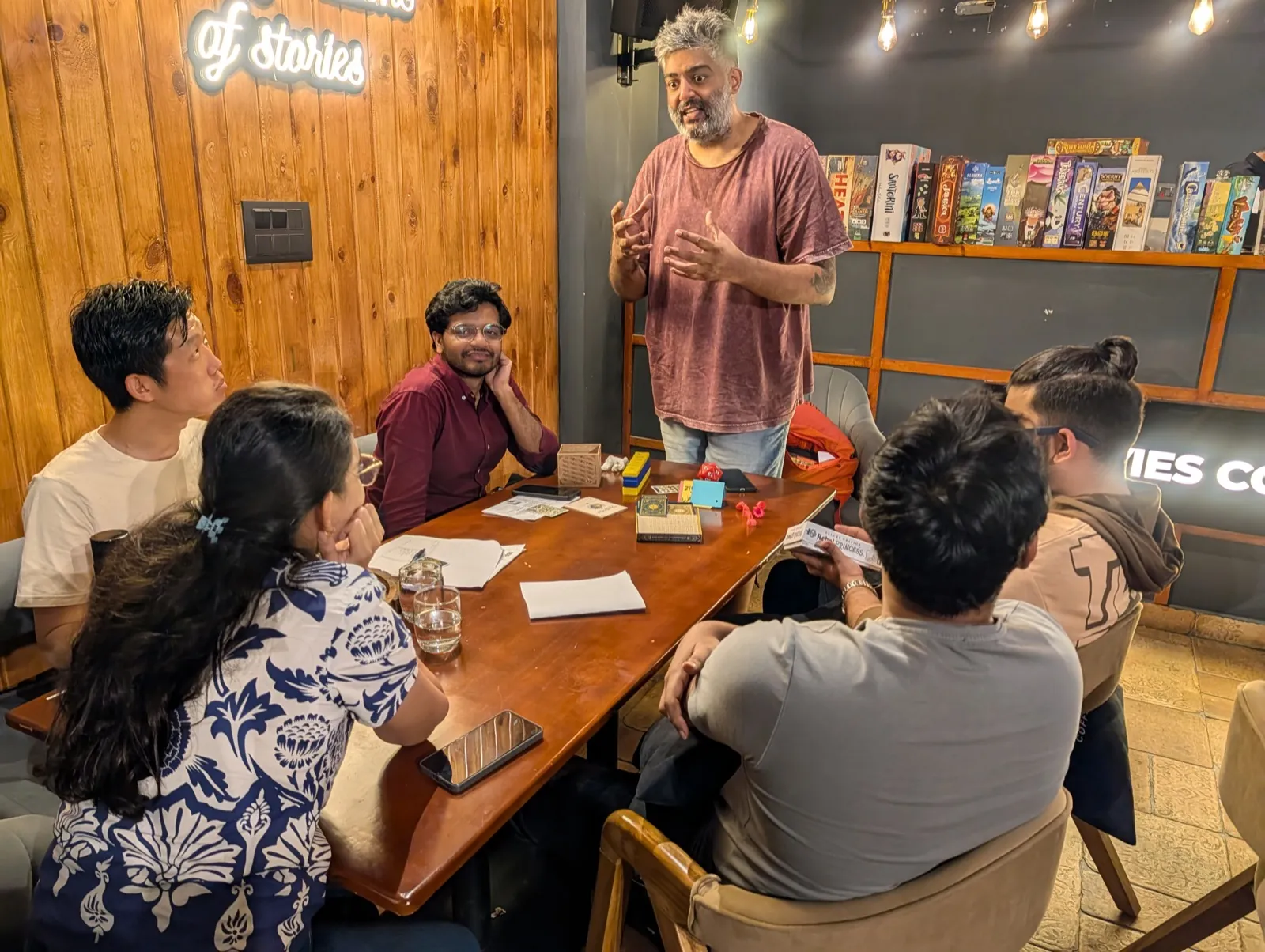
Put The Player First is one person. Me. Arvindh Sundar, based in Bengaluru, carrying seven games around in a bag.
Since 2019 those games have run for teams at a Fortune 100 company, a leading HR-tech platform, a Fortune 500 technology company, a global retail corporation, a global engineering and technology firm, a global pharmaceutical company, an enterprise software company, a large agri-inputs company, and others. Plus programmes at IIM Bangalore and IIM Indore.
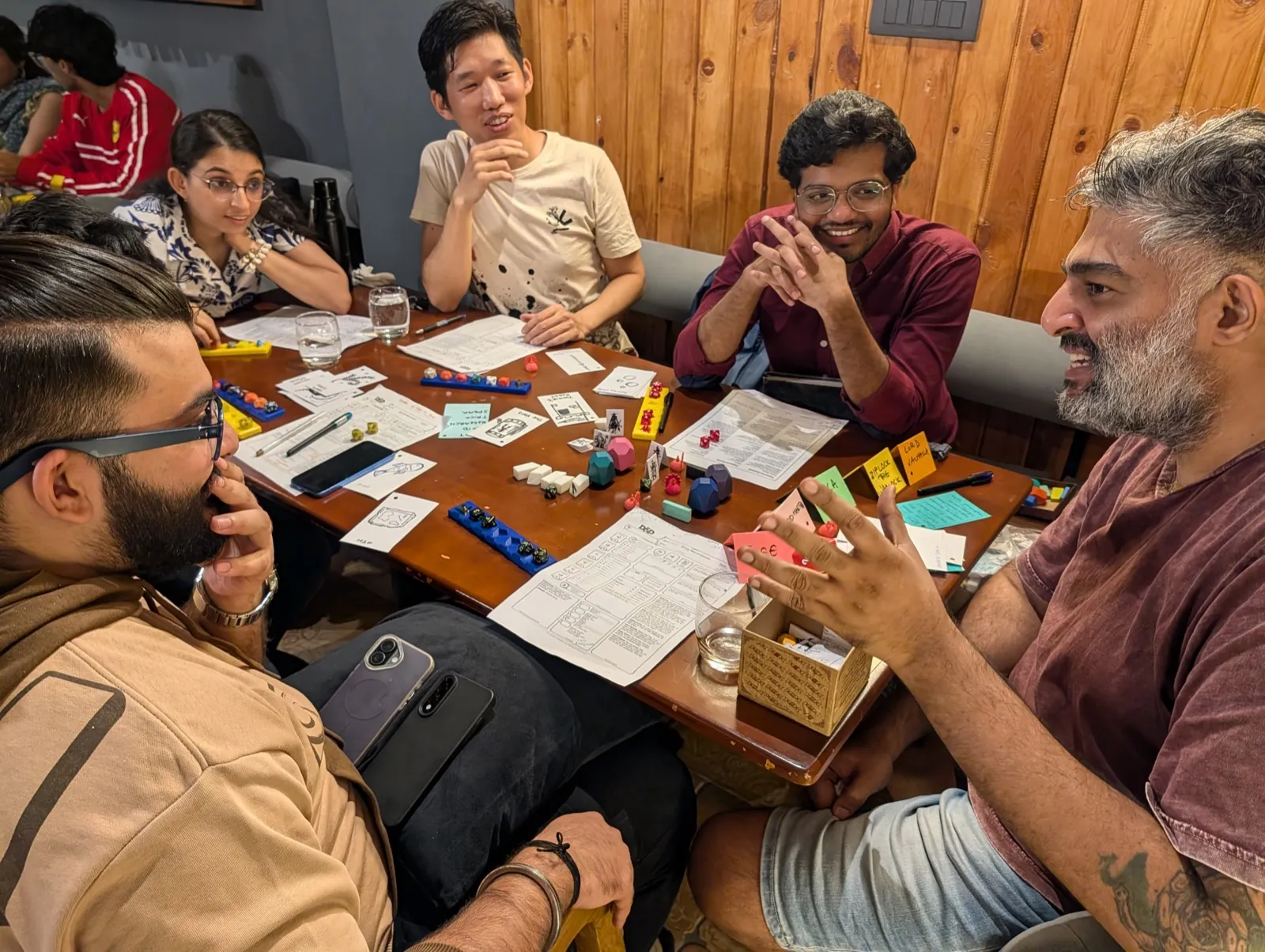
Here's the bit that matters. Each game is built to drag one specific leadership behaviour into the open. And the person who built it to do that is the person standing in your room, watching your team play it. Not a licensee. Not an associate with a printout and a brave face. Me.


Trusted by teams and leaders at
 Akamai
·
Akamai
·
 Bosch
·
Bosch
·
 Flipkart
·
Flipkart
·
 IIM Indore
·
IIM Indore
·
 Google
·
Google
·
 Maruti Suzuki
·
Maruti Suzuki
·
 Shell
·
Shell
·
 Novo Nordisk
·
Novo Nordisk
·
 Target
·
Target
·
 Meragi
·
Meragi
·
 Jain College
·
Akamai
·
Bosch
·
Flipkart
·
IIM Indore
·
Google
·
Maruti Suzuki
·
Shell
·
Novo Nordisk
·
Target
·
Meragi
·
Jain College
Jain College
·
Akamai
·
Bosch
·
Flipkart
·
IIM Indore
·
Google
·
Maruti Suzuki
·
Shell
·
Novo Nordisk
·
Target
·
Meragi
·
Jain College
What Clients Say
The number, before the nice words. 8.82 out of 10 average satisfaction across the six session-days of the Insight to Impact programme at a Fortune 100 company. 113 respondents filled in the form. That is one programme, not an average of everything I run.
"We'd run leadership workshops before. This was the first time we could actually see how our managers made decisions under pressure. The debrief alone was worth the session."
L&D Head, GCC (India)
"What surprised me was how quickly the room opened up. Within 20 minutes, patterns were visible that hadn't surfaced in six months of 360 feedback. We brought Arvindh back for two more cohorts."
Learning & Development Manager, Manufacturing
"I've sat through a lot of training. This was the first time I left thinking about my own behaviour, not the content on the slides."
Participant, Leadership Development Programme
Two Results, Both Checkable
Every trainer says the room loved it. Here are the two engagements where somebody counted.
One programme, six session-days. 113 respondents. Day 2 outscored Day 1 in every batch.
AI enablement, six session-days. Day 2 beating Day 1 is the one I care about - it means they came back keener than they left. They commissioned a second programme without being asked.
Read the case study →All 13 participants agreed they understood the learning objectives. No negative responses on any of the four measures.
Stakeholder management for the Frontline Manager Program, run with Bloom. 12 of the 13 said they would apply it. Every manager walked out with an action they had named themselves.
Read the case study →How a Session Works
Different games, same four beats. It never changes.
Roles, resources, objectives. Then we begin. No rehearsal, no warm-up round, no settling in. The game starts before anyone feels ready... which is exactly the point.
Rounds. Conditions shift. Decisions pile up on each other. A rubbish call in round one comes back to wreck round four, and everybody in the room watches it happen.
I'm not playing. I'm watching. Who spoke first, who went quiet in round two, who quietly stopped sharing information the moment things got tight. The debrief gets built from that, live. There is no script.
The EPPA loop. What happened? What did you keep doing? What does that say about how you actually operate? And what will you do differently, in which meeting, starting when? Nobody leaves with a general intention.
90 minutes to 6 hours. 15 to 150 people. In person only - the social stuff is the data, and a screen quietly deletes all of it.
 The Games
Seven of them. Each one aimed at a single behaviour, because a game that surfaces everything surfaces nothing. Have a look and see which one sounds like your team on a bad Tuesday.
Welcome to Zombiepuram
Factions, scarce resources, and no appointed boss. Who builds coalitions? Who ends up alone in a corner wondering what happened? Influence and negotiation, in the open, in 6 hours.
Learn MoreBloom
Relationships take effort now and pay off much later. So who invests, and who only calls people when they need something? Stakeholder behaviour, visible in 2 hours.
Learn MoreSticky Fingers
Nobody is put in charge, so somebody takes charge. Watch who. Then watch who quietly sits on the one piece of information everyone else needed.
Learn MorePlanetfall
The rules keep changing and no answer is clearly right. Some people adapt. Some people freeze and reach for the plan that stopped working two rounds ago. 2 hours.
Learn MoreRipple Effect
Every table runs its own company. Each deal is a choice: keep your word, or grab. Grab often enough and the shared market crashes for everyone. Cross-functional trust and systems thinking, and the very uncomfortable 90 minutes where a room sees it happen to them.
Learn MoreChaos in the Kitchen
Senior leaders, a situation that will not sit still, and not enough time to be clever about it. Strategic decisions made at the speed they actually get made.
Learn MoreThe Potter from Belagavi
Seven rounds, a potter's wheel, and the quiet moment somebody realises the person who stopped making pots is winning. Working smarter instead of harder, made visible.
Learn MoreThe Debrief Is Where It Happens
A serious game without a sharp debrief is just a game, and a nice afternoon out. EPPA is the loop I use to walk a room from what they did on the table to what they'll do on Monday.
Experience
What just happened? Not what you meant to do, not what the good answer would have been. What you did.
Patterns
What kept happening? The same choice, three rounds running, made by the same person. That's not a one-off. That's a habit with a costume on.
Principles
So what does that say about how this team really works? Not the version in the values poster. The real one.
Application
One behaviour. One named meeting. One date. "I'll communicate better" is not an action, it's a feeling, and it dies by Thursday.
The Rest of What I Do
The games are most of my week. But two of these are about AI, because I run almost my whole business on it and kept getting asked how, and the third is for people who would rather build their own game than book one of mine.
The AI Bootcamp
One weekend, four hours, online. A non-technical founder or leader leaves with their own AI setup actually running on their real work. No code. 8 seats.
Have a lookAI Bootcamp for Teams
You bought the licences and half the team has opened it twice. Same idea, built for a corporate room, in three sizes from a half day to two days.
Have a lookBuild Your Own Serious Game
Five sessions, one to one, spaced so you playtest between them. You finish holding a game you can run on Monday, and you own it outright.
Have a lookThe Philosophy
Behaviour under pressure is about the most honest data I've found. Games make the pressure. That really is most of the idea.
Read moreWork With Us
Are you an L&D consultant or a training vendor? Take the games to your own clients. The terms are different, and they're fair.
Partner with usCustom Game Design
When none of the seven is close enough, I build you one from scratch. It takes 6 to 8 weeks and it's yours.
Learn more
Common Questions
Are these games available digitally?
No, and I'm not planning to make them digital either. The whole thing runs on people reading each other. The pause before someone agrees. The two folks who quietly team up near the snacks. A screen deletes all of it and leaves you with a quiz. In person only.
Do participants need any preparation?
None. No pre-reading, no pre-work, no forms. They walk in, they get a brief, we start. People behave like themselves when they haven't had time to prepare a character.
Can the games be customised for a specific industry or context?
Usually you don't need it. Hoarding information and dodging a hard conversation look identical in pharma and in retail, so the seven games travel fine. If you genuinely need your own scenario modelled, I'll build a custom game - 6 to 8 weeks and a proper brief. But I'll tell you honestly when the existing one does the job, because it usually does.
Is this suitable for very senior teams. MD and C-suite?
Senior rooms give me the best debriefs I get. The patterns are older, sharper, and everyone has been politely not mentioning them for about four years. On the table it's a game, so naming it costs nobody anything. That's the bit that makes it safe enough to be useful.
What's the minimum group size?
12 for Sticky Fingers and Bloom. 15 for Zombiepuram, 16 for Ripple Effect. Below that the game still works and the debrief goes thin - eight people are too polite with each other to produce anything worth talking about. The crowd is part of the design.
What if the session doesn't deliver what we needed?
Then it's my problem, not yours. If your team doesn't come out with at least 3 named behaviour patterns worth changing, I redesign the next session and you don't pay for the redesign. The room isn't the variable here. The facilitation is.
With love from Bengaluru, this is Arvindh saying over and out.