
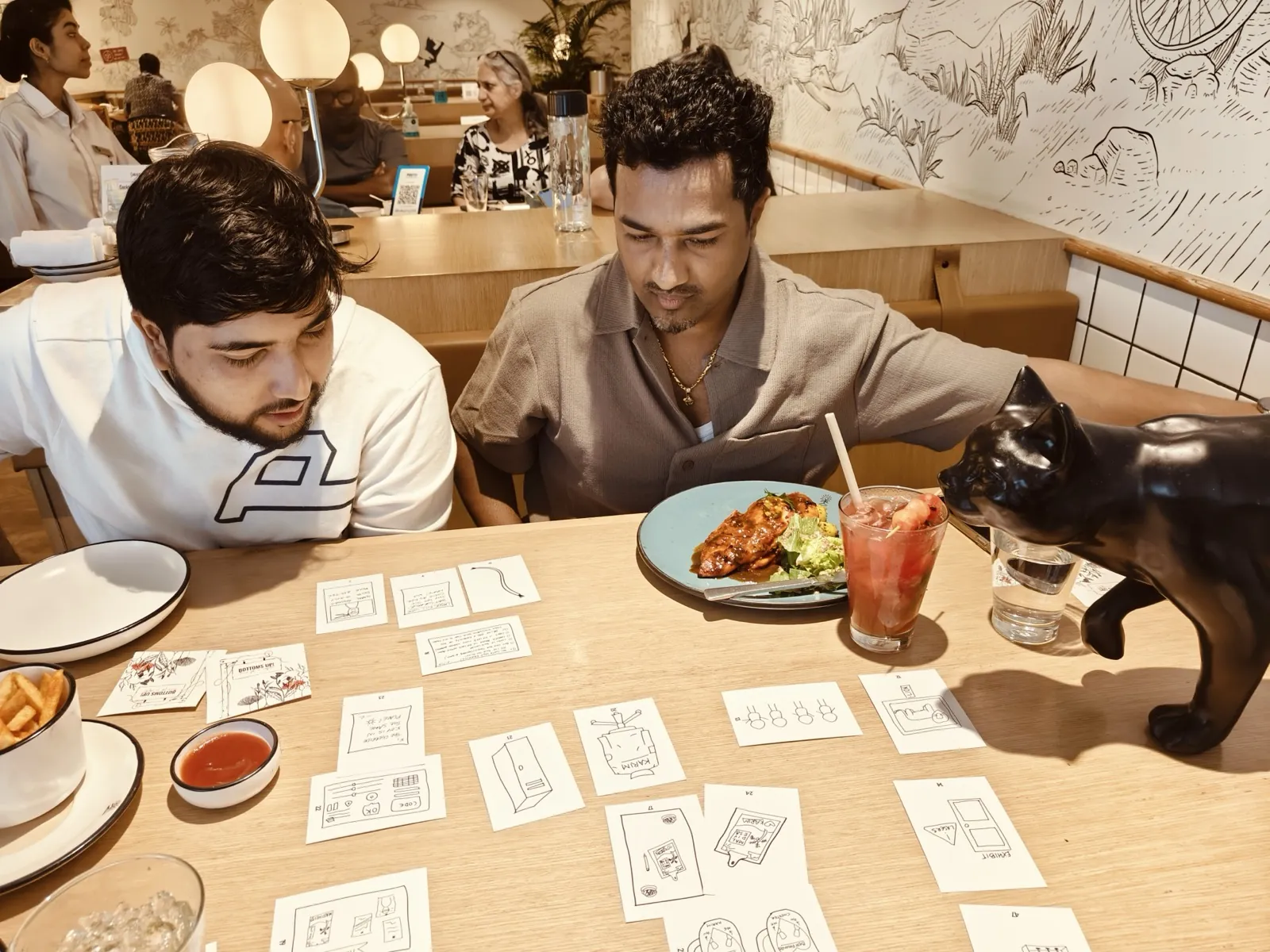
Sticky Fingers drops your team into a heist. They're a crew trying to lift a diamond out of a museum - and the only way out is to pool what each of them secretly knows.

 Why nobody can crack it alone - and that's the point
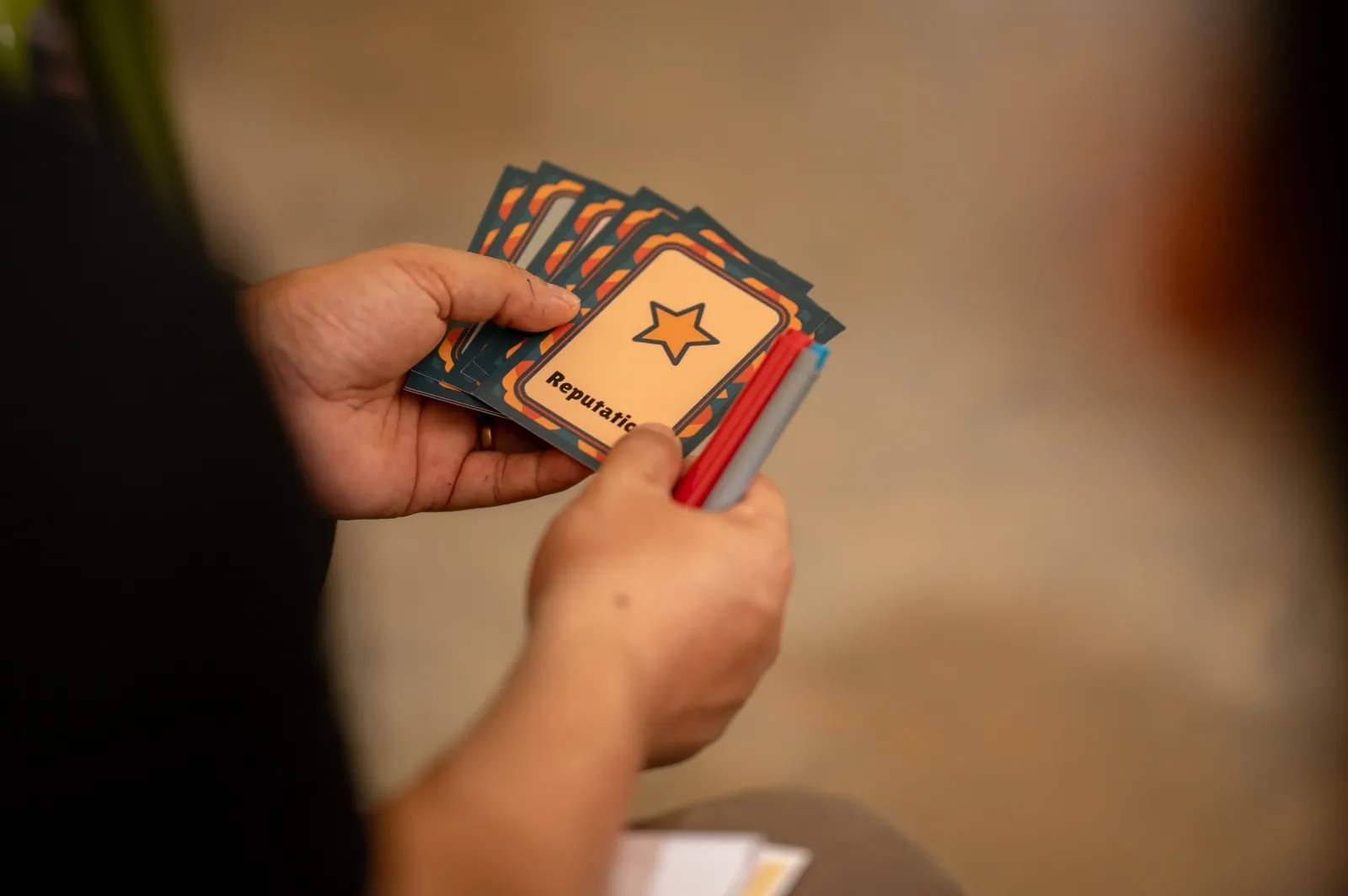
I built this on distributed information. Every person is handed a piece of the puzzle nobody else can see, so the exit is mathematically impossible for any one hero to solve solo. The cards force the room to do the exact thing teams quietly avoid under pressure: talk to each other. My job is to watch how they choose to.
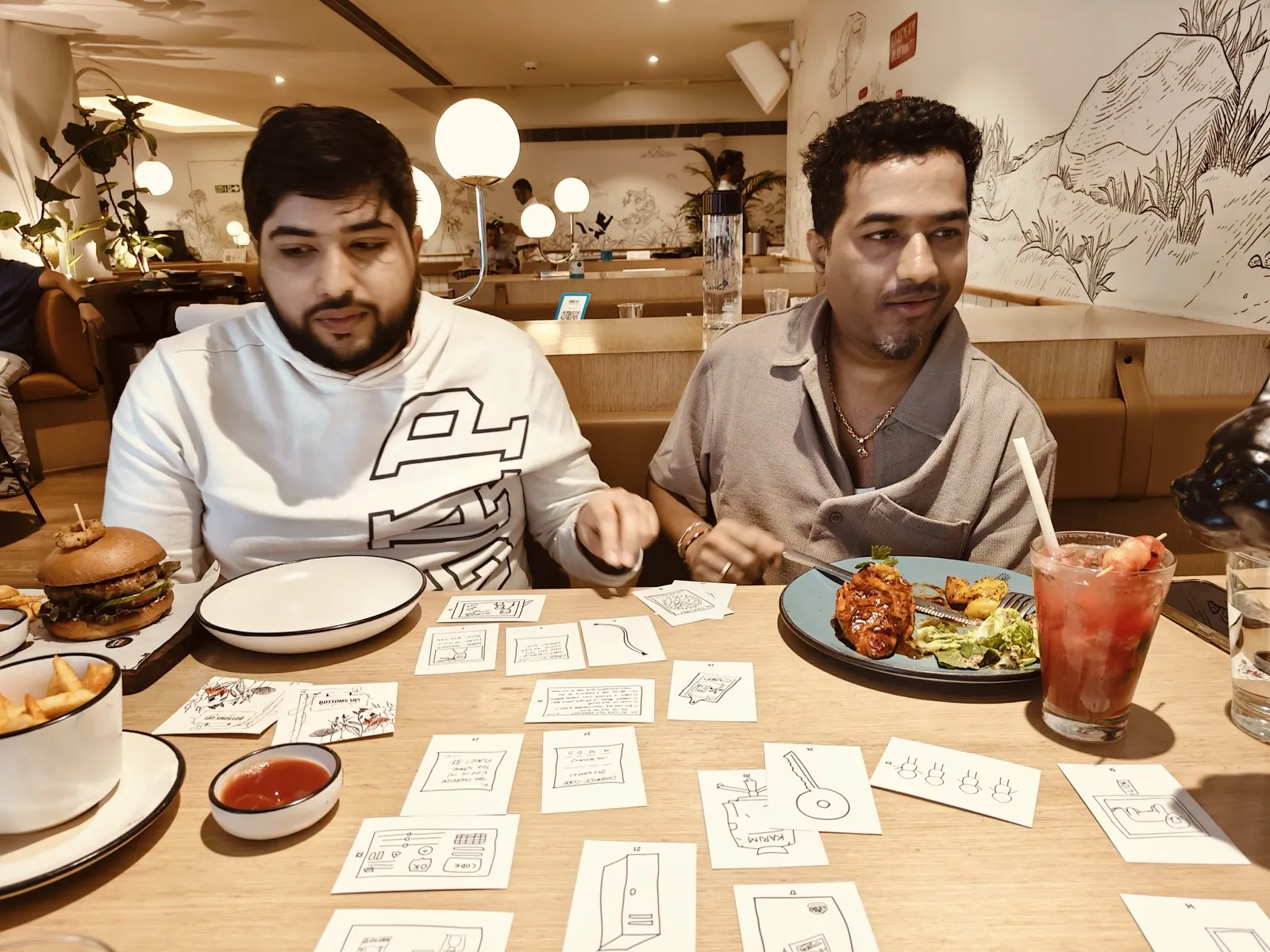
What Happens in the Room
The first five minutes are lovely chaos. Cards go out, and you can read the room instantly. Some people go quiet and process. Some start broadcasting everything they're holding. A couple physically get up and go hunting for whoever has what they need.
Then a leader emerges - never appointed, just the person who says "right, everyone tell me what you've got." Whether the room follows that person or talks over them tells you more about the team than a quarter of 1:1s will. I'm watching it happen and quietly noting who's who.
Here's the tell I see every single time: the teams that finish fast agree on how they'll talk in the first ten minutes. The teams that stall spend 45 minutes heads-down on their own sub-problem, surfacing only to ask "anyone got a red card?" before diving back under. The answer was always in the room. The only thing missing was a way to move information around it.
 What you'll see surface before the debrief even starts
Under an hour of pressure, the patterns your people carry into real work show up in the open:
- The announcer versus the hoarder. Who spills what they have the second the cards land - and who sits back to see what everyone else does first. Both show up inside two minutes, and both cost the team differently.
- Watch who the room actually listens to. Someone always steps up to gather the pieces ("tell me what you've all got"). The real signal isn't that they volunteer - it's whether the team follows them or quietly ignores them.
- The lone genius who slows everyone down. In nearly every group there's one person convinced they can crack their piece alone before looping anyone in. The game makes that instinct visibly expensive - and you'll both see it land.
- Decision by drift, not by choice. Most teams never actually decide how they'll communicate. They fall into a method in minute three and live with it for the next 45. Naming that in the debrief changes how they run their next real project.
- Who checks out when it gets hard. When the room stalls, someone disengages - sits back, stops offering, waits for a hero to save it. We connect that, gently, straight to how they behave when a real deadline slips.
- The reframer. Every so often, one person notices the whole approach is wrong and proposes a different one. Easy to miss in the moment, and one of the most valuable people to name out loud when it's over.
Who It's For
This one's for cross-functional and project teams - especially the ones quietly living in silos. If you want a group to get sharper at creative problem-solving together, it's a strong fit.
When to Bring This In
- New teams still finding their rhythm. Far better to surface the communication patterns in a game than in a live project with real money riding on it.
- When "people just aren't talking" keeps coming up. If your post-mortems keep blaming communication, this shows the whole room what that actually looks like in real time - no finger-pointing needed.
- Big rooms: offsites, town halls, all-hands. It holds energy at 150, which almost nothing does. A brilliant high-energy opener before a longer session.
- Functions meeting for the first time. Different teams, different locations, different habits - the game shows you fast whether they've built enough shared language to actually work together.
When I'll tell you it's not the right fit
- When the real issue is trust, not talking. Sticky Fingers will show you people aren't sharing. It won't tell you why. If the root cause is psychological safety, you'll see the symptom but the debrief won't reach the cause - and I'll say so up front.
- Very senior teams who want real depth. One hour is short. Seasoned leaders will enjoy it, but it works best paired with a longer game, not as the centrepiece of a leadership development day.
- When you need individual data, not team patterns. This produces team-level insight. If you're assessing individual leaders, another format will serve you better.
What changes when the room hits 150
Same chaos, much bigger canvas. Cards go out, some people process quietly, some announce everything, a few work the room. What separates the teams that crack it from the ones that don't is still one thing: does someone set a way to talk, early? "Everyone call out the suit you're holding" takes 90 seconds and changes the whole game. Do it in round one and you finish with time to spare. Skip it and you'll have the right cards in the room and no solution on the table 50 minutes later.
At 150, something extra happens: informal sub-leaders pop up across the room, each running their own cluster. Who steps into that, and how they connect back to the rest, is some of the richest behavioural data the whole day produces - and I'm tracking it live.
Specific Patterns That Surface
- Who calls out what they're holding straight away - and who waits to be asked before they'll contribute
- Who quietly takes on coordination ("let's organise this") without being told to, and whether the room lets them
- Who keeps working solo even when the game has made solo work structurally impossible
- Whether the group ever decides how to organise, or just drifts into a pattern and never revisits it
- Who reframes the approach when the first plan fails, and how fast the room gets behind the new one
- Who folds under the clock, and who stays constructive and keeps everyone moving
When to Bring This In
- New teams with no communication norms yet - the game hands them shared experience and shared vocabulary in a single hour
- Big offsites and all-hands - it holds energy at 150 and makes a great opener before a deeper session
- Teams asked to collaborate across functions or locations for the very first time
- When you want to actually watch how 150 people behave - far easier to read here than in almost any other format
When This Isn't the Right Fit
- When the block is trust or safety, not communication - you'll see the symptom, but resolving the root cause takes more direct work than one hour allows
- Senior teams wanting deep reflection - at an hour it's energetic but brief; pair it with a longer game or use it as a warm-up
- When you need individual, psychometric-style data - this is a team game, and the unit of analysis is how the group behaves together
Where the real learning lands: the debrief
Every session ends on an EPPA debrief - Experience, Patterns, Principles, Application. Nobody walks out with fuzzy "takeaways." They leave with one named behaviour to change and one specific place to use it on Monday. And I run the debrief myself, as the person who watched the whole thing unfold - that continuity is what makes it stick.
Bring this to your team
Tell me a little about your team and I'll tell you honestly whether this is the right game for them. No hard sell either way.
What Clients Say
"We'd run leadership workshops before. This was the first time we could actually see how our managers made decisions under pressure. The debrief alone was worth the session."
L&D Head, GCC (India)
"What surprised me was how quickly the room opened up. Within 20 minutes, patterns were visible that hadn't surfaced in six months of 360 feedback. We brought Arvindh back for two more cohorts."
Learning & Development Manager, Manufacturing
"I've sat through a lot of training. This was the first time I left thinking about my own behaviour, not the content on the slides."
Participant, Leadership Development Programme
Let's see if it fits your team
Book a quick discovery call and we'll talk through your team, your goals, and whether this is the right game - no obligation. Prefer to look first? I'll send the facilitation playbooks to your inbox so you can see exactly how it runs.
Book a discovery call WhatsApp Arvindh