
Why Clients Book This
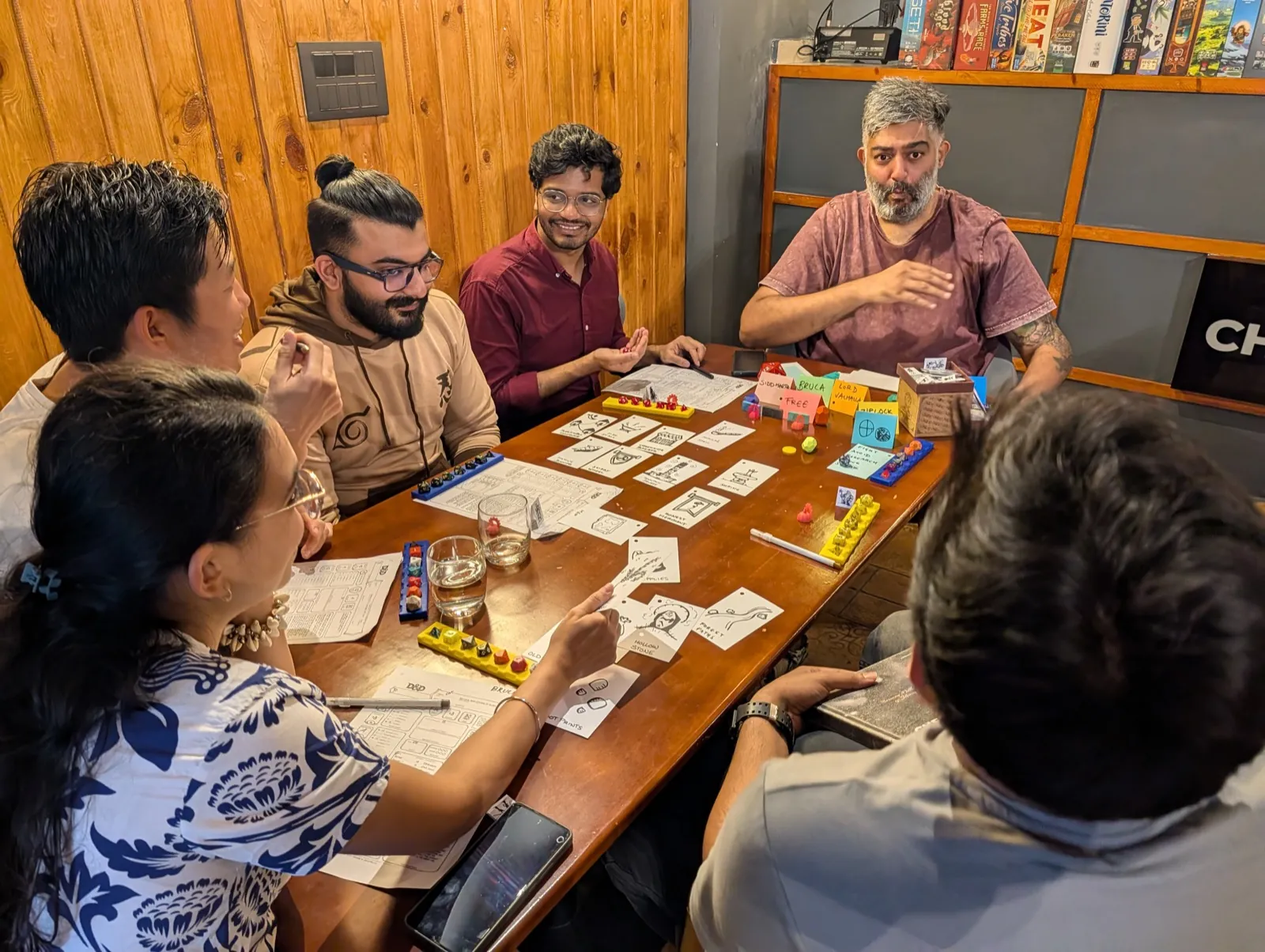
Why the designer runs the room himself
Arvindh built every game and facilitates every session. Nothing gets briefed to a junior and watered down on the way to your team. The value lives in the debrief, and the debrief depends on the person who designed the game being the one reading the room.
What a strategy simulation will never show you
This isn't a knowledge-transfer exercise or a business-acumen game. It surfaces how your leaders actually behave when it counts - who grabs control, who goes quiet, who trades the long game for a quick win. The game creates the data. The debrief turns it into change your people can't unsee.
A number you can put in a deck
8.82/10 average satisfaction. 100% comprehension. Real scores from real cohorts - not a vague "great energy in the room" you have to talk your CHRO into believing.
How It Works
Four steps from first hello to a session your leaders are still talking about weeks later. No long sales dance in between.
30 minutes. We talk about your team, the challenge you're trying to solve, and the context you're working in.
I recommend the right game, or combination of games, for the outcome you want. Sometimes that's one session. Sometimes it's a programme.
We align on the scenario, group size, and what the debrief should focus on. The session is shaped to your people, not a template.
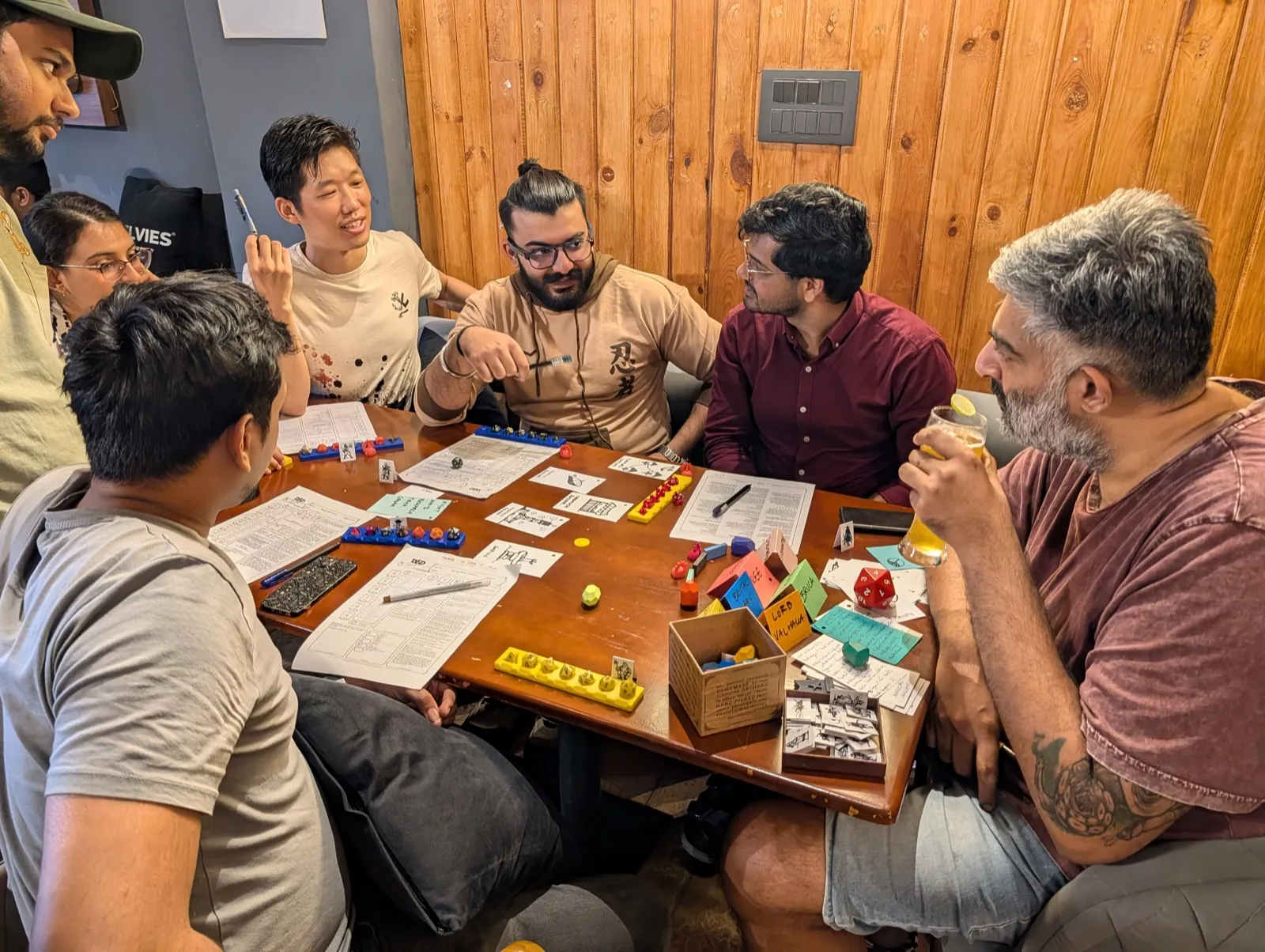
I run the full day. You observe your leaders as they really are. We debrief together and they leave with named actions.
Don't Take My Word For It
average satisfaction across 6 AI-enablement sessions
113 people rated it. Here's the tell: Day 2, the hard apply-and-decide day, outscored the easier Day 1 in every single batch. The client didn't wait to think it over - they commissioned a second programme straight after.
comprehension. All 13 managers engaged.
A stakeholder-management workshop with zero neutral and zero disagree on every metric - and every manager walked out with an action plan they'd committed to out loud.
What You Actually Get
Every programme includes all five, start to finish. Nothing's an upsell, nothing's clipped out to hit a price.
- A discovery call before anyone books a room
We get clear on your team, the real challenge, and exactly what the debrief needs to surface - so the session is built around your people, not a template. - The facilitated session, every minute of it run by Arvindh
Half-day or full-day. No associates, no hand-offs, no B-team when the calendar gets tight. - The EPPA debrief - where the real work happens
A structured debrief that ties what just happened in the game to named behaviour patterns your leaders can't argue with, because they watched themselves do it. - Plus: a written behaviour summary for your CHRO
A short report on the patterns that surfaced - proof for the person who signed off the budget, not just a good day everyone forgets. - A committed action plan from every single person in the room
Not a vague "I'll try to delegate more." Each participant leaves with named behaviours to change and a concrete plan to do it.

Questions Before You Book
How far in advance do I need to book?
Typically 3–4 weeks. For multi-batch programmes, 6–8 weeks, the logistics and customisation take longer when you're running multiple cohorts.
Can you run the session outside Bengaluru?
Yes. I travel for the right programme. Outstation sessions include travel costs, quoted up front so there are no surprises.
What group sizes do you work with?
12–50 participants per session. Larger cohorts run as multiple batches, which often works better, it keeps each session small enough for the behavioural data to stay sharp.
Do you offer virtual sessions?
The games are designed for in-person. Virtual delivery compromises the behavioural data, the social dynamics are the point, and screens kill them. I don't offer it.
Can we licence the game?
No. The game is inseparable from the facilitation. Licensing without the designer in the room defeats the purpose. The value is in the debrief, and the debrief depends on the person who built the game being there to run it.
We're an L&D agency. Can we bring you in for our clients?
Yes. Arvindh works with L&D agencies and training consultancies as a named specialist. You set your client relationship and your margin. Arvindh charges a facilitation fee directly to you. No revenue share, no referral arrangements, no conflict with your client relationship. You bring the brief. Arvindh runs the session.
What does it cost?
Programmes typically start at ₹50,000 for a group of 15–25 participants. Final investment depends on group size, seniority, location, and whether it's a single session or a multi-batch programme. Reply to this page and I'll send a quote within 24 hours.
Let's Talk About Your Team
Tell me who you're developing and what you're trying to shift. I read every message myself and reply within 24 hours - no funnel, no SDR.
My promise: if your team doesn't surface at least 3 named leadership behaviour patterns worth changing, I'll redesign the next session at no extra cost. The risk is mine, not yours.
Prefer to message directly? WhatsApp Arvindh or call +91 99458 61640.