
I run Put The Player First as a solo practice by design. Every game, facilitation method, and debrief philosophy is under direct personal delivery. No licensing, no associate delivery. You work with me.
Since 2019, I have designed and delivered serious games for teams at a global home-improvement retailer, a leading HR-tech platform, a Fortune 500 technology company, a global retail corporation, a global engineering and technology firm, a global pharmaceutical company, a global life-sciences research firm, and others. Programs at IIM Bangalore and IIM Indore in partnership with SHRM India. Recent average satisfaction: 8.82/10 across programmes. 100% comprehension and application scores from a leading HR-tech platform.
The underlying focus: understanding how people durably change behaviour under real conditions. Not performance change within workshops.
"Serious games create that environment. The stakes are low enough that people take risks. The emotions are real enough that insights stick."
Why This Work Exists
The focus is behavioural change, not business acumen. Strategy simulations teach frameworks. Digital learning tools transfer knowledge. This practice does neither. It surfaces how your leaders actually behave under pressure and gives them the feedback to change it.
Most leadership training works fine for the people who were already going to change. The frameworks make sense, the facilitator is engaging, the post-workshop scores are high. And then nothing changes.
The problem is that behaviour doesn't respond to information. It responds to consequence, feedback, and the experience of failing at something that matters, even slightly. Traditional workshops systematically remove all three.
Serious games put them back. Not as a trick or a novelty, but because the learning mechanism is genuinely different. When a leader makes a bad decision in a game and watches the consequences ripple through the next three rounds, they don't need to be told what went wrong. They already know. The debrief just helps them name it clearly enough to act on it.
That's the design principle: make behaviour visible, make consequences immediate, make reflection unavoidable. Everything else follows from that.
What the Work Produces
From a global home-improvement retailer's India GCC (6 sessions, 113 respondents): 8.82/10 average satisfaction. Day 2 outscored Day 1 in every single batch. Zero low scores. When asked what could be improved, one participant wrote: "No low score. It was fantastic."
From a leading HR-tech platform (Frontline Manager Program, 13 participants): 100% understood the session objectives. 92.3% committed to applying what they learned. 13 out of 13 were fully engaged, not a single neutral or disagree response across all four outcome metrics.
What Participants Say
"Various new concepts and mental models and how I can apply them readily."
Participant, Insight to Impact programme
"Good learning experience. I should be able to apply the knowledge."
Participant, Insight to Impact programme
The Games
How to Work Together
Most engagements start with a 20-minute conversation about the development challenge. Arvindh will ask about group size, seniority, the specific behaviour you want to surface, and what you want participants to leave with. If one of the six games fits, he'll tell you which one and why. If the fit isn't close enough, he'll say so.
Sessions are quoted per delivery, not per participant. Pricing depends on session length, group size, and travel. If you're a training vendor or L&D consultant looking to bring games to your clients, the partnership model has different terms.
Engagement Model
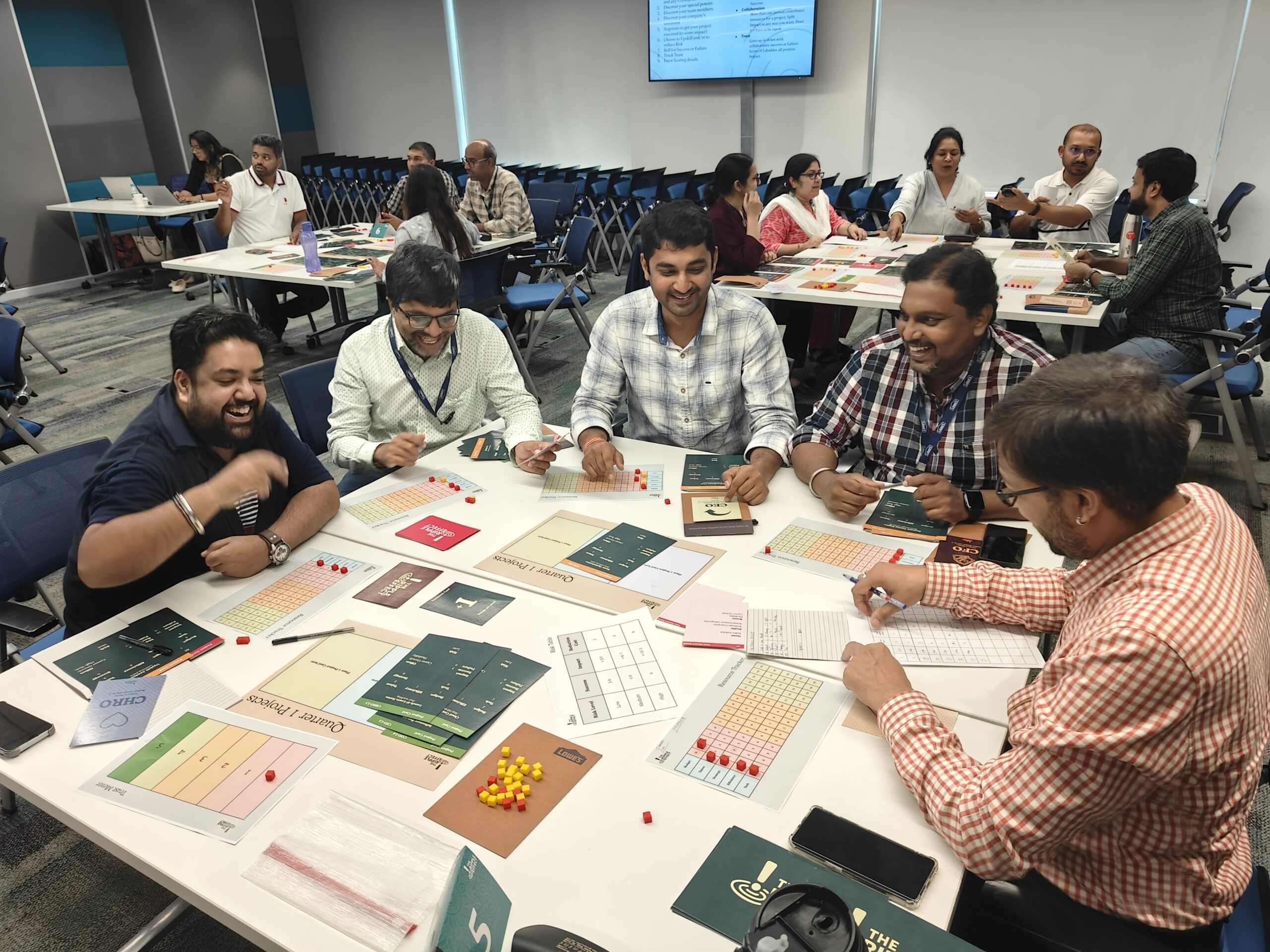
Sessions run in-person. Group sizes from 12 to 150. Duration from 90 minutes (Sticky Fingers) to 6 hours (Welcome to Zombiepuram).
Most organisations come with a specific development need: cross-functional collaboration, stakeholder management, decision-making under ambiguity, influence without authority. The game selection follows from the need. If no existing game fits precisely, I design a custom simulation.
I work directly with L&D heads, HR Business Partners, and training vendors who bring the games to their clients. The session design conversation happens before every engagement, not to sell a particular game, but to establish whether a game is the right intervention at all. Sometimes it isn't, and I'll say so.
No lectures. Games generate the data. Debriefs determine the value. Sessions close with specific behavioural commitments: a named action, a named situation, a named date.
Background
Before building Put The Player First, Arvindh worked in learning and development across corporate and consulting contexts. The frustration that drove the practice: watching technically excellent training programmes fail to produce the behaviour change they were designed for, not because of poor design, but because slides, case studies, and reflection exercises don't engage the part of the brain where habitual behaviour lives.
Serious games emerged as an answer to that specific failure mode. Seven years of designing, testing, and refining games for leadership development have produced a practice built around one question: what format actually changes behaviour in leaders who have stopped expecting training to challenge them?
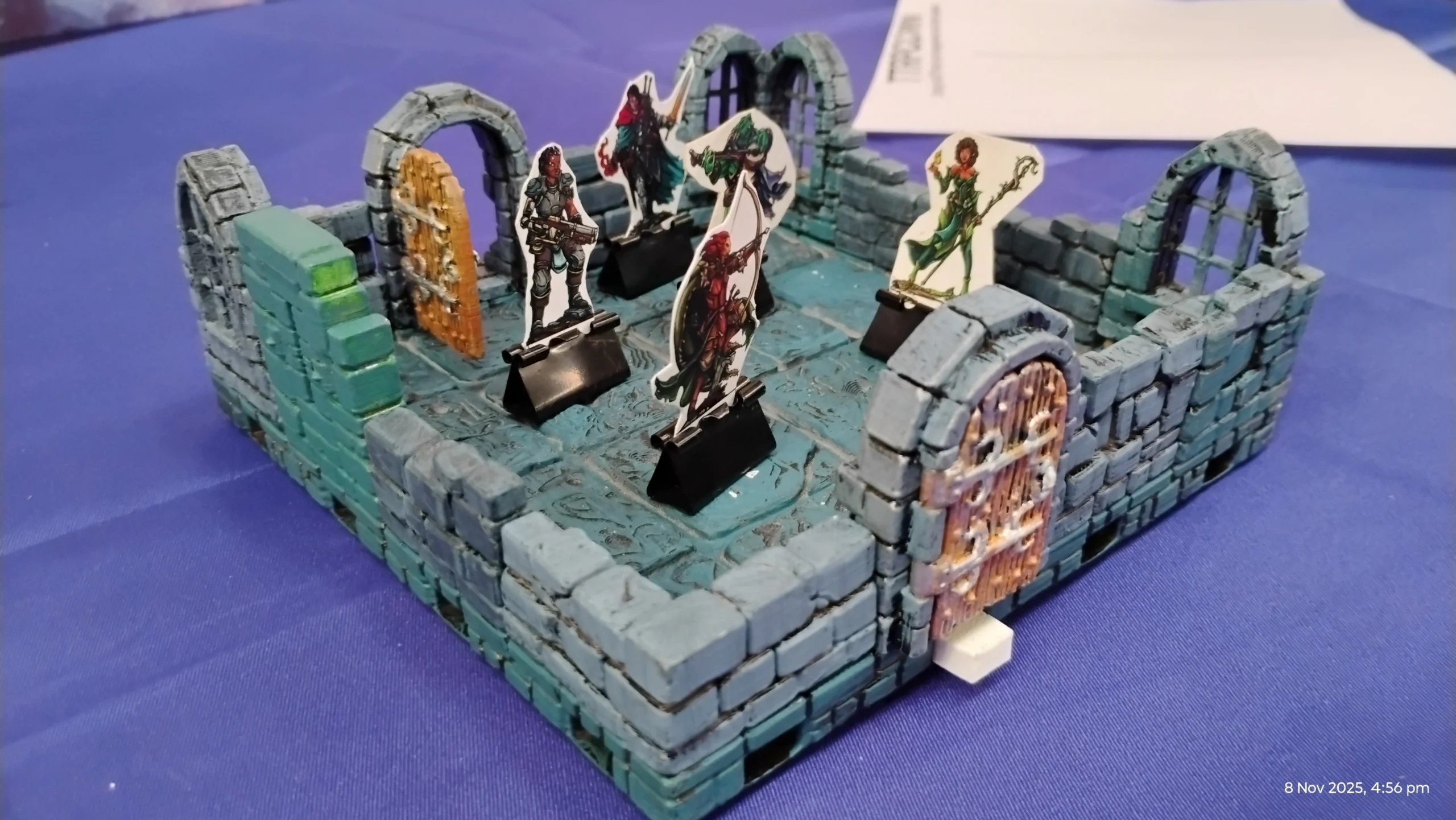
Outside the facilitation work: TTRPGCon organiser (India's serious tabletop gaming convention), D&D game master, and writer on learning design and play at the blog.