The Put The Player First Framework
One method for turning any growth challenge into a game that changes how people behave. Sixteen boxes, three tenets, no toolbox.
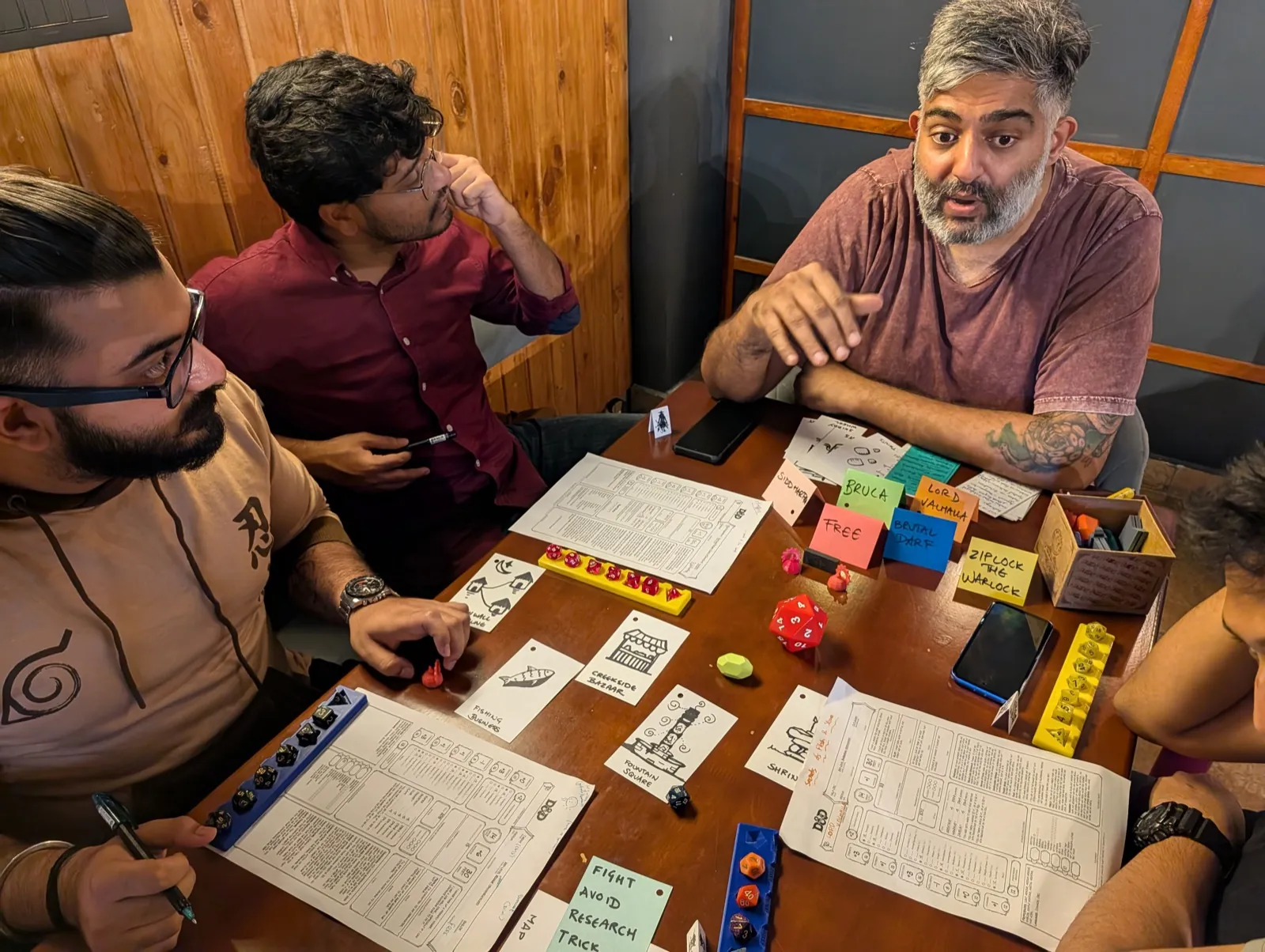
Short answer: it is a method for turning any growth challenge into a behaviour-changing game. Sixteen elements, three tenets, and for a corporate team it hardens into a build-kit: four decision architectures plus the EPPA debrief loop. The Hero is the leader. The Monsters are the behaviours that fall apart under pressure. The Quest is a serious game. And the Weapons are the mechanics that drag real behaviour out into the open, where everyone can see it.
Key takeaways
| Framework element | In a leadership development context |
|---|---|
| Hero | The leader or team going through the development experience |
| Monsters | The concrete behaviours that fail under pressure (hoarding, avoiding the hard conversation, optimising your own scorecard) |
| Big Bad | The systemic root that keeps spawning those behaviours (siloed incentives, a no-triage culture, fear of being wrong) |
| Quest | The serious game itself, an ordered set of challenges tied to specific Monsters |
| Weapons | The four decision architectures: scarcity, asymmetric information, interdependence, cascading consequences |
| Loot and Level Up | The measurable behaviour change, claimed through the EPPA debrief |
One framework, not a toolbox
Here is the thing nobody in my industry says out loud. Most development providers sell you a toolbox. A personality assessment here. A workshop module there. A coaching engagement somewhere off to the side. Three vendors, three vocabularies, and a leader who is now a Blue Achiever with a Growth Mindset and a Communication Gap... and no idea what to do on Monday.
This is the opposite. One umbrella that holds the whole transformation in a single shape, so nothing is bolted on and nothing quietly contradicts anything else.
The claim underneath is almost insultingly simple. Every change that ever worked has the same bones. A person stuck in a situation they have stopped enjoying. Specific things causing it. A road out. Tools for the road. And rewards, the kind you can show people and the kind you only feel, that compound as you walk. Name those bones precisely and you can build something that shifts behaviour. Get vague about them and you have built a course. Courses get completed. That is the entire thing courses do.
For an L&D buyer the practical bit is this: the corporate build-kit is not a separate thing I sell you on top. The four decision architectures are the Weapons. EPPA is how the Hero claims the Loot. One method, diagnosis to debrief. No add-on module.
The sixteen elements, in business language
Always filled in from the Hero's chair, never from mine. Four acts: the Drive (why the Hero moves at all), the World (the honest diagnosis), the Allies (who helps, and why they get believed), and the Journey (where the change happens, and where it sticks).
Act 1 - The Drive: why the Hero moves
 1. The Hero is the person or team going through the change. In a corporate engagement that is the leader, the cohort, or the cross-functional group nobody can get to agree on anything. Every other box gets filled in from their point of view. Not the sponsor's. Not mine.
 2. Paradise is the world once this particular set of Monsters is dead. Not a problem-free utopia. Just the version where these specific behaviours have lost their teeth. You say it out loud at the start and you earn it at the end. Then the next challenge becomes the next campaign.
- 3. The Why is the fuel: the emotional and logical reason this change is not optional. A cohort that cannot say its Why out loud quits at the first hard session - politely, by scheduling something else that morning. Paradise is the postcard. The Why is the engine that keeps the Hero walking towards it.
Act 2 - The World: the diagnosis
 4. The Broken World is their reality right now, while the problems are winning. The initiative that has been "nearly done" for five months. The two functions who now communicate only by forwarding each other emails. The high-potential who goes completely silent the second the brief turns vague. Its sub-field, Failed Attempts, is everything already tried that flopped - the training that did not stick, the offsite that changed nothing. That graveyard is where the room's cynicism lives. Naming it is what buys you the right to try again.
 5. Monsters are the concrete behaviours, never the abstract noun. Not "poor collaboration." Rather: "every head protects their own KPI and the company quietly loses money." Named, observable, specific enough to point at.
 6. The Big Bad is the systemic thing that keeps spawning those Monsters. Siloed incentives. A culture that rewards the gut call over the process. A deep belief that being wrong once is fatal. Beatable inside one campaign, so this transformation is genuinely winnable... and then it comes back wearing a different face. That is not a flaw in the design. That is the infinite game doing its job.
Act 3 - The Allies: who helps, and why
 7. The Guide is whoever helps: a facilitator, a programme, a system. The only qualification that counts is having walked the path, or having walked it beside somebody else.
 8. Superpower is the specific reason this Guide works where the last three did not. Here it is one stubborn design discipline: behaviour under pressure is the only data worth developing from, because knowledge transfers and behaviour does not. That is the thing that kills the room's very well-earned cynicism and gets them to actually commit.
- 9. The Party is the peers in the fight, not the Guide on the touchline. The cohort. The accountability group. The one person who notices you have gone quiet and asks why. The single biggest predictor of whether change sticks is who is standing next to you when it gets hard.
Act 4 - The Journey: where change happens and sticks
 10. The Quest is the step-by-step road from Broken World to Paradise. In practice, the serious game: an ordered run of challenges, each one aimed at a named Monster. Doing the Quest is the grind, and the grind is where the change gets earned. There is no shortcut. I have looked.
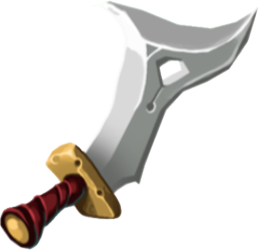 11. Weapons are what the Hero picks up to kill each Monster. In the corporate build-kit, the four decision architectures below. A Weapon with no matching Monster is just dead weight in the bag.
- 12. The XP Bar is the visible progress signal between the tangible rewards. The anti-quit mechanic. The felt sense of "I am getting better at this" at the exact point where nothing external has landed yet. Leave it out and people fold the moment it gets hard, because they cannot see that they are winning.
 13. Loot is the tangible reward. Visible proof. The named behaviour a leader can point at and repeat on Monday. Loot is what you get.
 14. Level Up is the internal shift. Loot is what you get; Level Up is who you become. Steady when the brief is vague. The reflex to triage instead of thrash. The instinct to optimise the whole thing instead of your own square of it.
- 15. The Sacrifice is what the Hero gives up to win. The comfort of the old behaviour. The safety of not saying the thing. The identity built on being the cleverest person in the room, which is the expensive one. No cost named means it was never a plan. It was a wish.
- 16. Respawn is the move you plan before you need it, for the day you slip back. You cracked under pressure and did the old thing. Fine. You come back and carry on. The XP Bar lets you see you are winning; Respawn is what you do on the days you cannot see it at all. That is the whole difference between a dip and a quit.
The Weapons: four decision architectures
This is where the framework stops being a diagram and becomes a build-kit. Four mechanics manufacture the kind of pressure a slide deck simply cannot, and each one is pointed at a class of Monster.
- Scarcity. There is not enough budget, time or information for everyone to win. Forces trade-offs. Shows you who hoards, who shares, and who actually leads once the pot gets small. The Weapon against dithering and turf.
- Asymmetric information. Each player holds a different piece of the picture, so nobody can act well without saying what they see and listening for what they have missed. The Weapon against teams who have mistaken talking for communicating.
- Interdependence and alliance. Your outcome is wired to someone else's, so progress needs negotiation, give-and-take and a coalition. The Weapon against the leader who wins their own quarter beautifully while the company loses.
- Cascading consequences. A rubbish call in round one wrecks round four, and the whole table watches it happen. That builds ownership, and it makes the gap between a good decision and a lucky outcome horribly visible.
EPPA: the debrief engine
A game without a debrief is an activity. A lovely one, sometimes. Still an activity. EPPA is the loop that turns what happened on the table into behaviour that is different next week. Four stages, always in this order.
- Experience. Rebuild what actually happened, decision by decision, before a single person is allowed to interpret it.
- Patterns. Name what kept repeating. The avoidance. The over-control. The retreat into compliance the instant the stakes went up.
- Principles. Connect those patterns to leadership principles through the participants' own insight, not a lecture. It lands because they got there.
- Application. Commit. A named behaviour, a real situation, a date. This is where the Hero claims the Loot and the Level Up.
Reconstruct. Name. Connect. Commit. That is the whole debrief engine and it fits on a napkin. See how it powers a full programme in Decision Labs.
Life is an RPG: the three tenets
The sixteen elements give you the structure. The worldview underneath is simpler than that: every winnable transformation has the same bones, so life is an RPG. Three tenets tell you how to play it - Pick the Right Quest. Put the Player First. Play the Infinite Game.
- Pick the Right Quest. Focus before you charge in. Of everything a team could fix, which two or three actually move them towards Paradise? Pick those, start now, and do not spread yourself thin across every Monster on the field. That is how you end up with a programme that touches everything and changes nothing.
- Put the Player First. A good facilitator does not run the campaign they would personally enjoy running. They run the campaign the players need. You start from who the Hero actually is, not who a competency model says they ought to be. It is the whole reason the design starts with a team's real behaviour and not a generic wheel of nine competencies.
- Play the Infinite Game. You are not playing to win once and go home. Finite players kill the boss and roll the credits. Infinite players know the Big Bad comes back with a new hat on, and they play anyway. Last campaign's Paradise becomes next campaign's Broken World. Stepping back to ask whether you are even playing the right game is part of the discipline, not a distraction from it.
The framework in action
Every game is a complete instance of the framework, built for one specific Monster. The Quest changes and the Weapons get tuned. The engine underneath does not.
- Bloom goes after stakeholder and relationship management: treating different people differently while somehow keeping the whole network alive at once.
- Sticky Fingers goes after communication and creative problem-solving under the clock, with the information split up so nobody can be the lone hero.
- Planetfall goes after learning agility and acting on half a picture: a repeatable process for situations you do not control.
- Ripple Effect goes after cross-functional collaboration and the local-versus-global trap, where everyone is being perfectly rational and the company still loses.
- Chaos in the Kitchen goes after decisions under uncertainty and triage: telling a good process apart from a lucky outcome when everything is urgent at once.
- Welcome to Zombiepuram goes after negotiation, influence and coalition-building when nobody has the full picture. Competing factions, hidden agendas, and the biggest room I run.
Get the framework, the games, and facilitation playbooks by email
One short email when there is something genuinely worth using: a new game, a debrief move that worked, or a look behind the curtain at a real session. Not weekly. I do not have that much to say.
Common questions
What is the Put The Player First framework?
A method for turning any growth challenge into a behaviour-changing game. Sixteen elements (Hero, Paradise, The Why, Broken World, Monsters, Big Bad, Guide, Superpower, The Party, Quest, Weapons, XP Bar, Loot, Level Up, Sacrifice, Respawn) and three tenets: Pick the Right Quest, Put the Player First, Play the Infinite Game. For corporate teams it becomes a build-kit of four decision architectures plus the EPPA debrief loop.
How does it apply to leadership development?
The Hero is the leader or team. The Monsters are the behaviours that fall apart under pressure. The Quest is a serious game, and the Weapons are the four decision architectures. EPPA turns what happened in the game into Loot and Level Up, which is the behaviour change you are actually paying for.
What are the four decision architectures?
Scarcity forces trade-offs. Asymmetric information forces people to talk. Interdependence forces negotiation. Cascading consequences force ownership. Together they are what make a game show you real behaviour instead of performed behaviour.
What is EPPA?
The debrief engine: Experience, Patterns, Principles, Application. Rebuild what happened, name the patterns, connect them to principles through the participants' own insight, then commit to something concrete - a behaviour, a situation, a date.
Related reading
- Serious games for leadership development: the complete guide
- Decision Labs: turning game decisions into behavioural data
- Custom serious game design for your context
- See the full catalogue of serious games
See the games Bring the framework to your team
With love from Bengaluru, this is Arvindh saying over and out.