
Team Building Games for Employees That Actually Work
Most build a nice afternoon. A few build a different team.
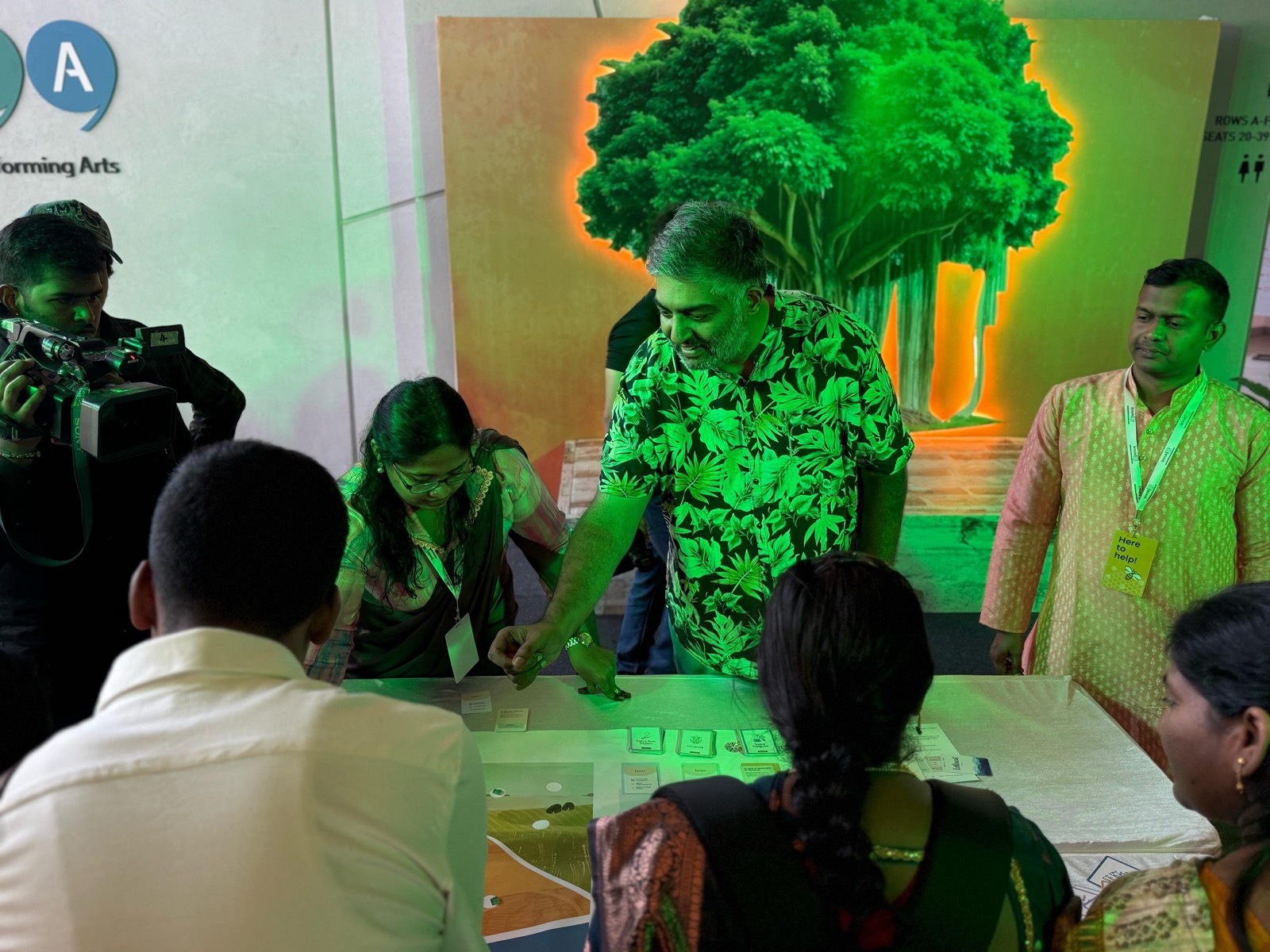
Short answer: The best team building games for employees are matched to a goal and a group size, not picked at random. Use quick icebreakers to warm up a new team, problem-solving challenges to build collaboration, and decision-based serious games when you need to actually change how people work together under pressure, not just have fun for an hour.
Key takeaways
| Goal | Use this type | Group size | Time |
|---|---|---|---|
| Warm up a new or mixed team | Icebreakers | Any | 10-20 min |
| Build collaboration and trust | Problem-solving challenges | 4-8 per team | 30-60 min |
| Surface communication gaps | Constraint-based games | 6-20 | 45-90 min |
| Change how leaders actually behave | Facilitated serious games | 8-100+ | Half to full day |
 Why most team building games do not change anything
Here's the thing nobody says out loud after a successful offsite. Most team building games for employees produce energy, laughter and some genuinely good photographs. Then everybody goes back to behaving exactly as they did before. That isn't a failure of effort. It's a failure of design. A game with no stakes, no scarcity and no consequences cannot show you how a team operates, so it cannot change how a team operates either. It builds rapport, which is a real and useful thing. Rapport just isn't the same animal as collaboration under pressure.
The fix isn't a better icebreaker. It's picking the right tier of game for what you actually need, and being honest with yourself about which one you're buying.
 Team building games by goal
Icebreakers (warm up a room)
- Two truths and a lie - fast, works at any size, lowers the social temperature.
- Common ground - small teams race to find five things everyone shares. Surfaces unexpected connections.
- Map of the room - people physically arrange themselves by tenure, hometown, or skill. Movement plus discovery.
Problem-solving challenges (build collaboration)
- The build challenge - teams construct something to a spec with limited materials. Reveals planning, roles, and who takes over.
- Escape-room style puzzles - shared goal, time pressure, distributed clues. Forces communication.
- The trading game - teams have unequal resources and must negotiate to win. Surfaces fairness, influence, and alliance-building.
Constraint-based games (surface real dynamics)
- Scarcity simulations - not enough budget, time, or information for everyone to win. You see who hoards, who shares, who leads.
- Silent build - teams complete a task without speaking. Exposes how a team coordinates when its default channel is removed.
Serious games (change behaviour, not just mood)
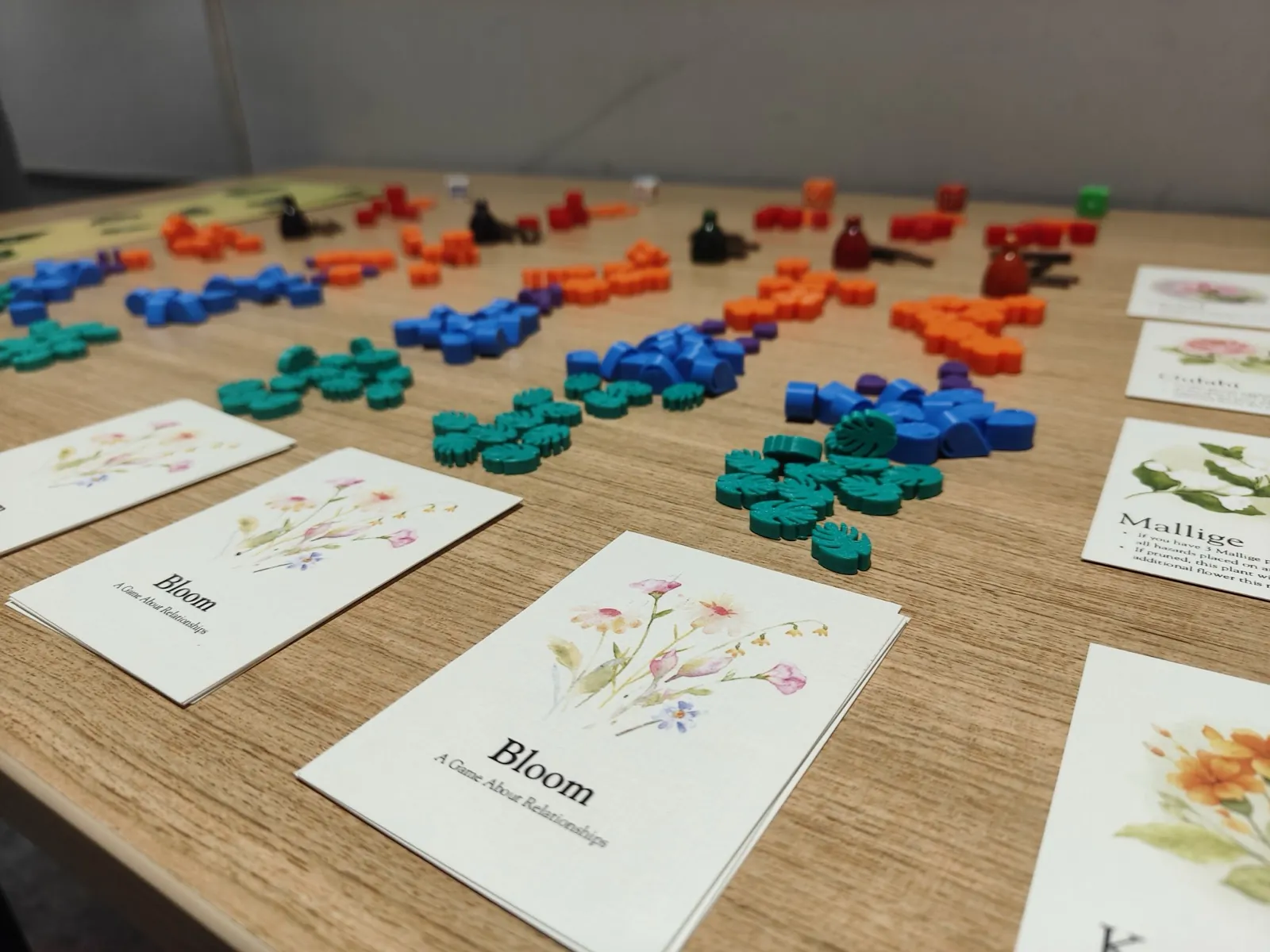
When you want a different team rather than a good afternoon, you need a serious game. A designed decision environment where behaviour has nowhere to hide, and a debrief that turns what happened into something people carry back to work. These are the ones I design and run myself - leadership, negotiation, collaboration, deciding when nobody knows the answer. Have a look at Bloom (stakeholder influence), Sticky Fingers (negotiation and trust), and Planetfall (systems thinking).
 How to run a team building game so it lands
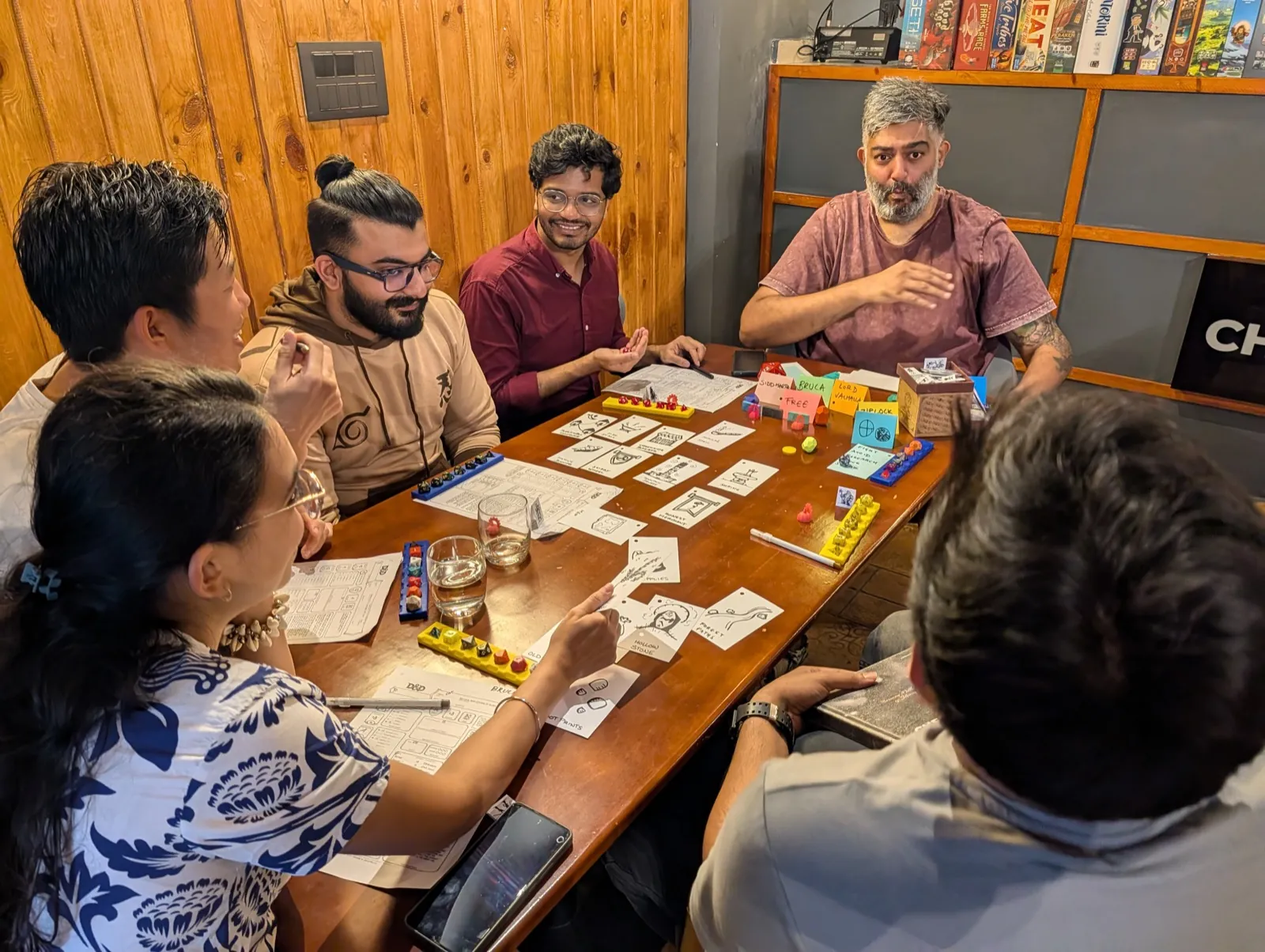
- Pick the goal first. Rapport, collaboration, or behaviour change. The goal picks the game, not the other way round.
- Set a real constraint. Time, resources, or information. No constraint, no insight. It's that blunt.
- Protect the debrief. The game makes the data. The conversation afterwards is where anything actually changes. Cut it for time and you ran an activity, not a development session.
Get new games and facilitation playbooks by email
One short email when there's something worth using. A new game, a debrief technique, or a look behind the curtain at a real session. Nothing weekly for the sake of weekly.

Common questions
What are the best team building games for employees?
The ones matched to a goal and group size. Icebreakers for new teams, problem-solving challenges for collaboration, and serious games when you need to change behaviour, not just build rapport.
How are serious games different from regular team building games?
Regular games build rapport and energy. Serious games build measurable behaviour under real constraints, with a debrief that turns what happened into change.
How many people do you need?
Most work from 6 to 30. Icebreakers scale large; problem-solving works in teams of 4 to 8; facilitated serious games run from small cohorts to 100-plus split into competing groups.
Team building by context
The right approach changes with who is in the room and how they work. Deeper guides for specific situations:
- Team building activities for managers - building and leading your own team.
- Executive team building - alignment, politics, and silos on senior teams.
- Remote team building - making the in-person gathering count for a distributed team.
- Virtual team building activities - what online formats can and cannot do.
Related reading
- Serious games for leadership development: the complete guide
- Serious games vs team building activities
- See the full catalogue of serious games
Come and talk to me See the games
With love from Bengaluru, this is Arvindh saying over and out.