
Virtual Team Building Activities
Online games are fine for morale. They hit a wall the moment behaviour change is the goal.
Here's the straight version: virtual team building activities - video-call games, online escape rooms, quiz platforms - are genuinely good for light morale and onboarding warmth. They are terrible at changing how your team works. A screen quietly removes the three things behaviour change needs: physical presence, real stakes, and the awkwardness of not being able to opt out. So if the goal is to see real working behaviour and shift it, the work happens in a room. Let me show you exactly where the line sits, so you spend the budget in the right place.
 What virtual activities are genuinely great for
There is a real, honest job that online activities do well, and I will happily point you to it. When a new joiner needs to put faces to names, a thirty-minute video-call quiz or a virtual escape room breaks the ice fast. When a distributed team has not laughed together in weeks, a shared online game hands them a reason to. This is social glue, and social glue matters more than cynics admit.
So use them for exactly what they are: a virtual icebreaker at the top of an all-hands, a themed trivia round on a Friday, a collaborative puzzle that gives a remote group a shared win. These lift the mood and warm up relationships, and that is a real outcome. The only mistake is asking the format to do more than that - and then wondering why nothing about the team actually changed on Monday.
 Why the format hits a wall the moment you want change
My thesis is one line: knowledge transfers, behaviour does not. You can tell a team to communicate better, delegate more, or trust each other. They will nod, and nothing will move. Behaviour only changes when it is first made visible under pressure and then debriefed honestly - and a screen-based activity cannot do either step well. Here is exactly where it breaks:
- No physical presence, so you lose the signal you came for. The behavioural data lives in the room - who leans in, who goes quiet, who takes the pen, who talks over whom. A grid of muted video tiles flattens every bit of it.
- No real stakes, so people perform a polite version of themselves. Online games are abstracted and low-consequence. Without genuine pressure you never see how anyone actually operates when it counts - which is the only thing worth watching.
- Opting out is one tab away. A second monitor, a Slack ping, a camera switched off - and quiet disengagement is completely invisible to the facilitator. In a physical room, presence is not optional.
None of this is a knock on the tools. The tools are good. It's the format. The same online escape room that is perfect for making a new joiner feel welcome simply cannot surface the friction a team has to walk into in order to grow.
How this differs from remote team building
People run two very different questions together. One is "how do we build culture and trust across a team that is spread out?" - a question about distributed-team culture over time, and I cover it on remote team building. The other, the one this page answers, is "what can online activities actually do?" - a question about a format and its ceiling. A remote team can have a strong culture and still get almost no developmental value from a Kahoot round. Keep the two separate and you will make far better calls about where your time and budget go.

What behaviour change actually needs from you
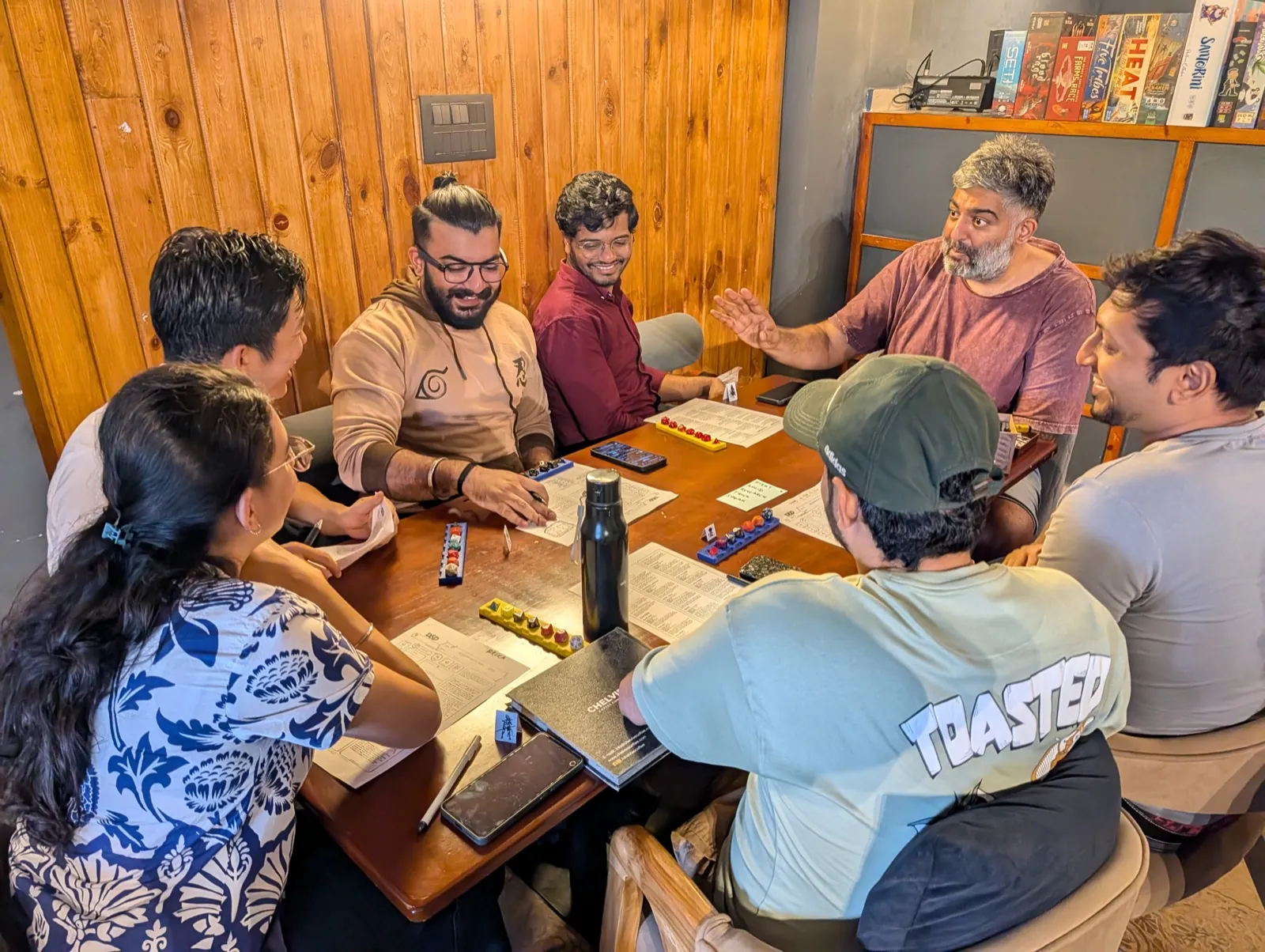
The work that genuinely moves a team runs on two engines: a serious game that puts people under real pressure so behaviour becomes visible, and a structured debrief that turns what happened into change. I call the debrief the EPPA loop, and it is where the value lands. Both engines need bodies in a room. Sticky Fingers works precisely because the tension is physical and shared - you cannot mute it, and you cannot fake your way through it.
If you are weighing options, start with the pillar on team building games for employees, which lays out what makes a game developmental rather than decorative. For deeper reading on facilitation, formats, and what to ask any vendor, see my guides. The conclusion I give every client is the same: when behaviour change is the goal, do it in person. When you just want a team to smile together across time zones, a virtual activity is perfect - use it, and expect exactly that and nothing more.

Straight answers
Do virtual team building activities actually change how a team works?
No. Online activities can lift the mood for an hour, but they cannot surface or shift real working behaviour. There is no physical presence to read, no real stakes, and disengaging is one muted tab away. Behaviour change needs pressure, body language and consequence - and only an in-person room delivers all three.
What are online team building activities genuinely good for?
Light morale and onboarding warmth. A video-call quiz, an online escape room or a virtual icebreaker helps new joiners put faces to names and gives a distributed team a shared laugh. Use them as social glue - just not as a tool for development or measurable change.
How is this different from remote team building?
Remote team building is about building culture and trust across a distributed team over time. This page is about the online-activity format itself - the video-call games and quiz platforms - and the ceiling that format hits. The two overlap, but they ask different questions.
Can you run a virtual session for our team?
No. Every session I run is in person, because the social dynamics in the room are the behavioural data I work with, and screens flatten that signal. If your goal is behaviour change, I run the work face to face - I would not do right by you any other way.
Come and talk to me See the games
With love from Bengaluru, this is Arvindh saying over and out.