Insight to Impact: Think and Decide Better With AI
Your team has AI. So does everyone else's. The only thing that separates them now is the thinking behind the prompt - and that's exactly the part I build.
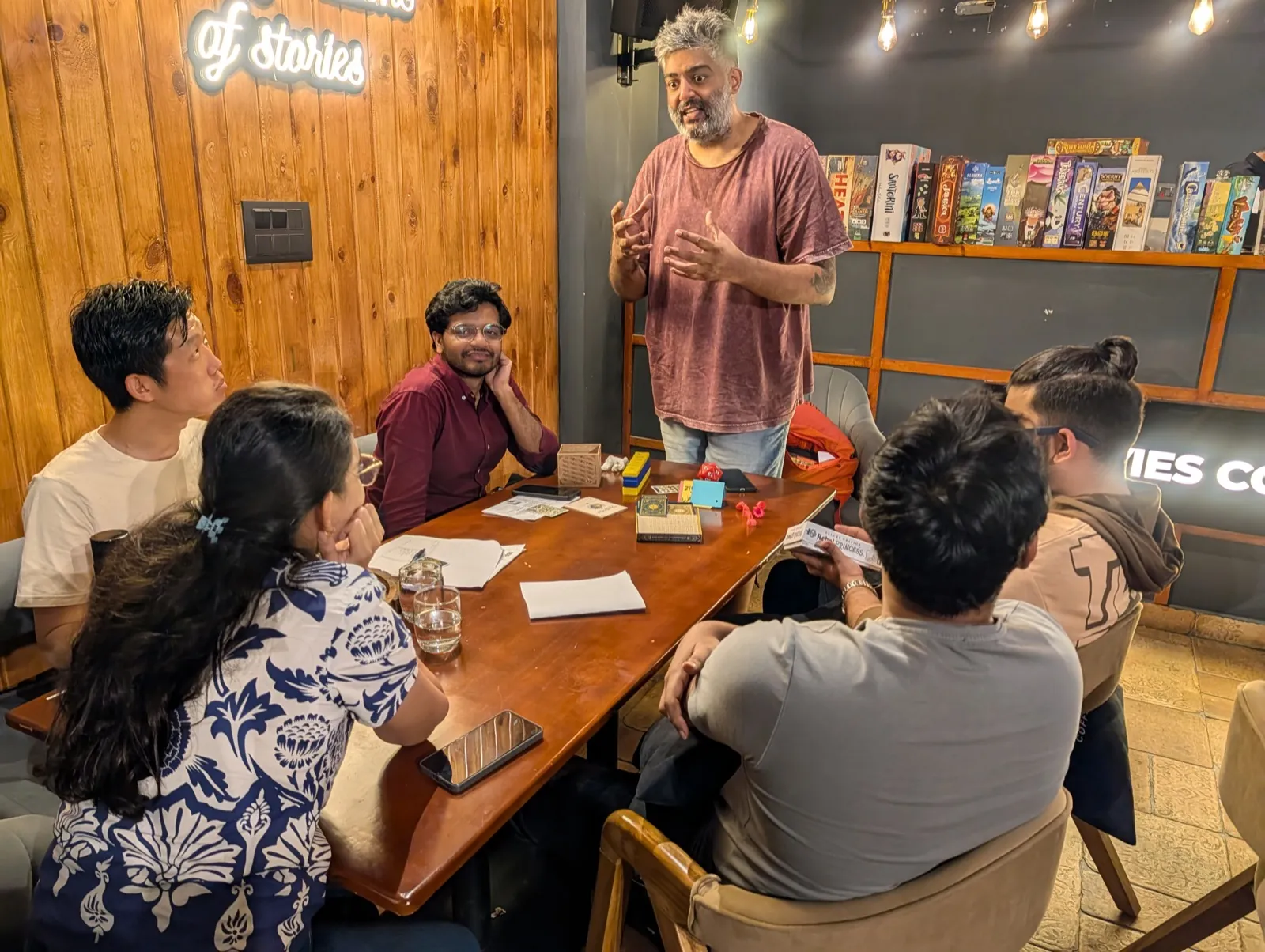
Short answer: Insight to Impact is a program that helps leaders and teams think and decide better, using AI as a genuine thinking partner rather than a search engine. It is delivered experientially: participants frame real problems, work structured thinking tools, and pressure-test decisions in facilitated sessions, so they leave with judgment they can apply on Monday, not just frameworks to admire. It is built on the Put The Player First framework and runs inside our Decision Labs approach to experiential learning.
Key takeaways
| Question | The short version |
|---|---|
| What is it | A program for better thinking and decision-making, with AI as a thinking partner |
| Who it is for | L&D teams, leaders, and teams facing ambiguity and AI-era reskilling |
| How it works | Experiential and game-based: real decisions, structured tools, debrief, minimal lecture |
| What changes | How people frame problems, use AI, and reach decisions they can defend |
| Proof | 8.82/10 across 3 batches, 113 respondents, follow-on program commissioned |


 What Insight to Impact is
It's a named program, not a one-off workshop and not another framework you read once and shelve. The job it does is simple to say and hard to build: help your people think better and decide better when the answer isn't obvious. AI sits inside that, not on top of it. Here's the uncomfortable truth most L&D teams already suspect - your people can now search faster than ever, and it hasn't made a single decision any smarter.
So the program treats AI as a thinking partner, not a vending machine. Your people learn to frame the problem before they prompt, stress-test the assumption they didn't know they were making, widen the options and then narrow them with intent, and tell a genuine insight apart from a fluent-sounding paragraph. The skill being built is judgment under ambiguity. The tool is just one instrument for it - and it'll be a different tool next quarter anyway.
Who it is for
You'll recognise your team in at least one of these:
- You've been handed an "AI reskilling" mandate - and you already know a tools rollout won't survive the board asking "so what actually changed?"
- Your leaders keep deciding on half the facts - competing priorities, no clean answer, a gut call dressed up as decisiveness - and they'd love a way of thinking they can actually repeat.
- You bought the AI licences and still aren't seeing leverage - because the bottleneck was never the access. It's the thinking in front of the keyboard.
Participants run from individual contributors to senior leaders, and the program flexes to their seniority and the real decisions they're wrestling with - not a generic curriculum.
How it works
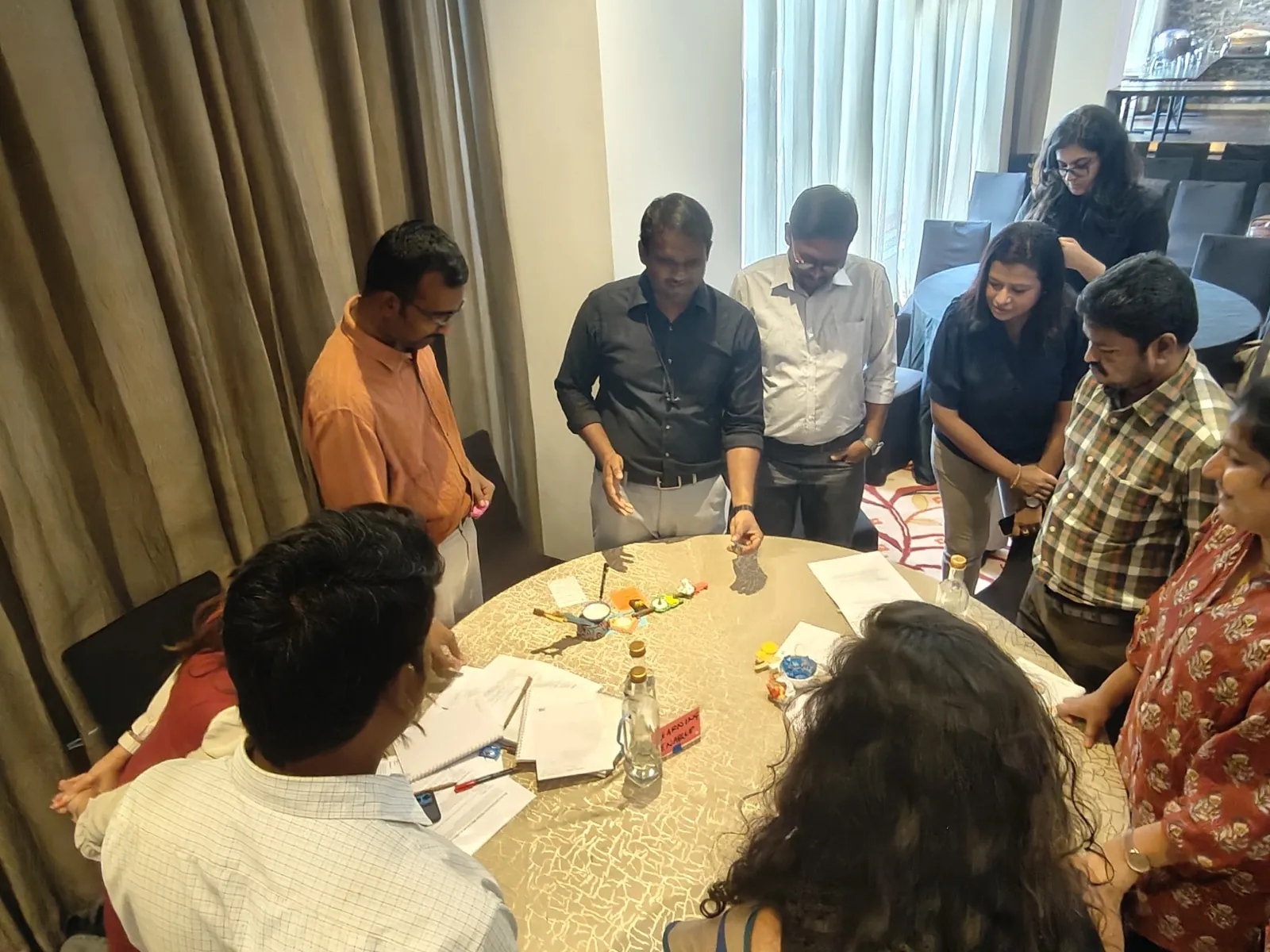
The delivery is experiential and game-based. Participants do most of the work; lecture is kept to a minimum. Concepts land through structured activities and real decisions, then a debrief turns what happened into something people can carry back to work. This is the Decision Labs method: put people in a situation that responds to their choices, make their thinking visible, and develop it from there.
Here's the two-day shape, drawn from how it's actually run in the room:
- Day 1 - Think better with AI. How to frame a problem before you prompt. How to tell a symptom from the actual problem, so you stop solving the wrong thing fast. Structured tools for pulling an idea apart and building it back up. And how to catch a confident-sounding hallucination before you act on it. Every concept gets tested on a live scenario, never a slide.
- Day 2 - Apply and decide. This is where it gets real. Teams take a shared scenario, argue it out, agree a recommendation, and commit to a concrete action - then their peers pull it apart before anyone leaves the room. It's the harder day, and it's the one participants consistently score higher (more on that below).
The format scales from a focused leadership cohort to a full capability-centre rollout across multiple batches. It can also be designed around a specific decision the team is facing, rather than a generic curriculum.
Where it fits in the Put The Player First system
Insight to Impact is one expression of a single underlying engine. The Put The Player First framework turns a growth challenge into a designed experience: a player, a real problem, a quest with consequences, and a debrief that claims the learning. Insight to Impact applies that engine to thinking and decision-making with AI.
It sits alongside our serious games, which build specific behaviours such as collaboration, negotiation, and learning agility under pressure. If you want the broader context on why experiential, decision-based design changes behaviour where classroom training does not, start with the serious games for leadership development guide.
What it produces
I'll keep the outcome claim honest: this is about capability and judgment, measured the way development should be - by what participants value, what they commit to, and whether the client comes back for more. Insight to Impact has run as a two-day AI enablement program for a Fortune 100 retailer's India centre, across three batches of around 22 professionals each. Here's what came back:
- 8.82 out of 10 average across 113 people and six sessions - with not a single low score in the pile.
- The apply day beat the theory day. Day 2, where they had to actually decide, outscored Day 1 in every batch. That's the opposite of how most trainings go, and it's the whole point.
- They came back. On the strength of this work alone, the client commissioned a brand-new follow-on program. The clearest vote a client can cast.
Read the full delivery, design, and numbers in the Insight to Impact AI enablement case study.
Get new games and facilitation playbooks by email
One short email when there is something worth using: a new game, a debrief technique, or a behind-the-scenes look at a real session.
Common questions
What is the Insight to Impact program?
A program that helps leaders and teams think and decide better, with AI as a genuine thinking partner. It is delivered experientially, so people leave with judgment they can apply, not just frameworks to admire.
Who is it for?
L&D and capability teams, leaders facing ambiguity, and teams that already have AI but are not getting leverage from it. Participants range from individual contributors to senior leaders.
How is it different from AI tools training?
Tools training teaches features and prompts. This builds the thinking underneath: framing, diagnosis, telling output from outcome from insight, and reaching a decision you can defend. The tool changes; the thinking compounds.
Has it been delivered before?
Yes. It ran as a two-day AI enablement program for a Fortune 100 retailer's India capability centre, across three batches, scoring 8.82/10 across 113 respondents with zero low scores, and the client commissioned a follow-on program.
Related reading
- Insight to Impact AI enablement case study
- The Put The Player First framework
- Decision Labs: consequence-based decision environments
- Serious games for leadership development: the complete guide
- See the full catalogue of serious games
Talk to me about your team Read the case study first
No obligation, no pitch deck - just a straight conversation about the decisions your people are wrestling with, and whether this is the right way to sharpen them.