
Serious Games vs Gamification for Leadership Development
Same vocabulary. Completely different animals. One gives you a badge, the other gives you a bad afternoon you never forget.
Short answer: Gamification sticks points, badges and leaderboards onto content you already own, so people will actually finish it. A serious game bins the content and gives you a simulation instead - real decisions, other people, consequences you have to live with. Gamification is for getting content consumed at scale. Serious games are for changing what leaders do.
Key takeaways
| Dimension | Gamification | Serious games |
|---|---|---|
| What it is | A reward layer bolted onto content you already have | The experience itself - a simulation you act inside |
| Best for | Compliance, onboarding, product knowledge, habits | Leadership, negotiation, collaboration, deciding in the fog |
| What it measures | Whether you clicked through it | What you did when the decision cost something |
| Facilitation | None needed. The dashboard watches you | A live debrief, run by someone who saw it happen |
| Scale | Enormous. It is software | Small cohorts, on purpose, because depth needs room |
Gamification works well for...
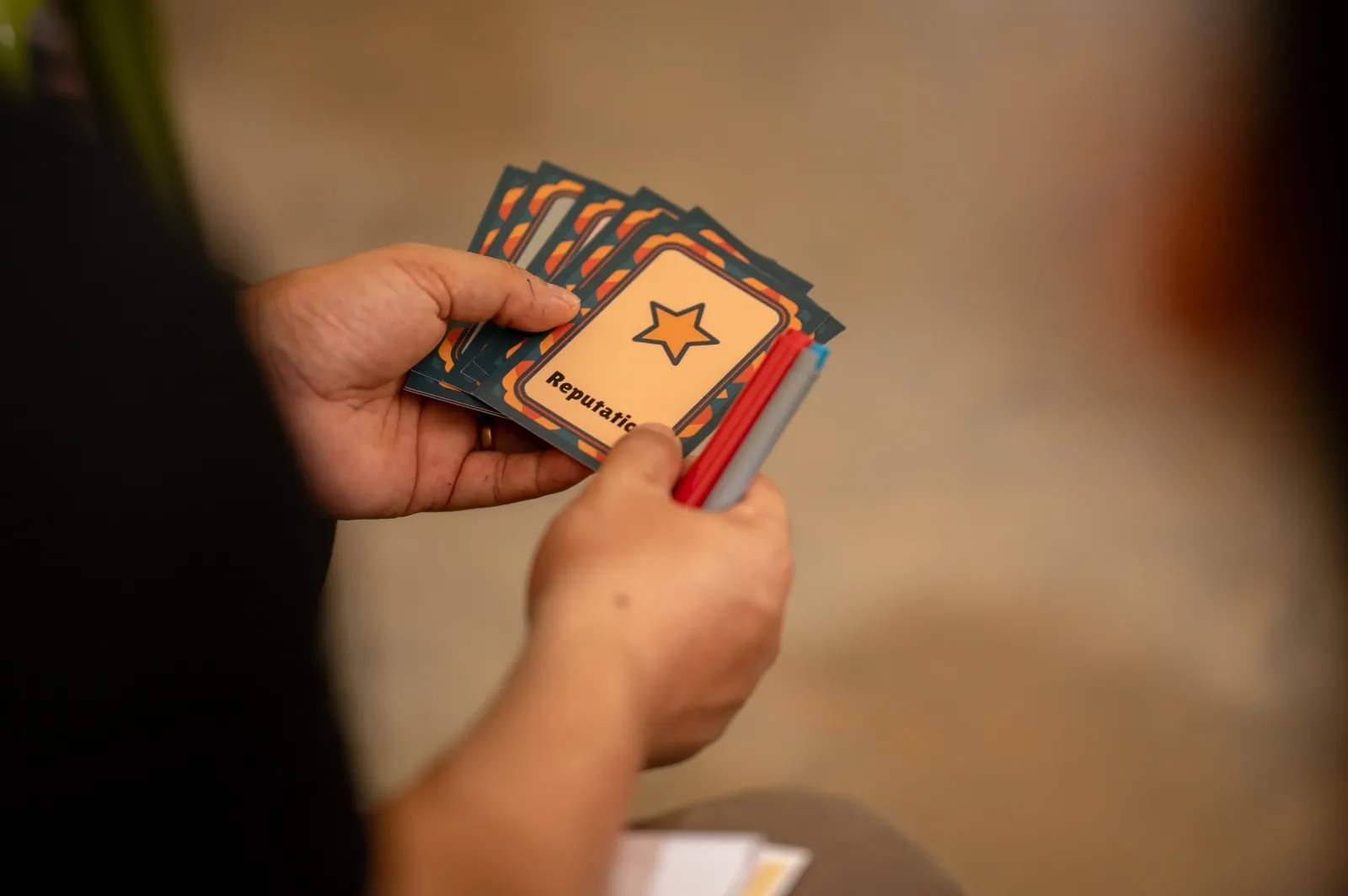
Getting things finished. Points, badges, leaderboards, streaks - layer that over material nobody would voluntarily open, and suddenly they open it. The compliance module gets done because there is a score. The LMS course gets completed because there is a nine-day streak nobody wants to break. The sales floor makes more calls because the dashboard is public and somebody else is currently on top of it. That is a real problem, solved properly, using the bit of the brain that cannot resist a number going up.
In Indian corporate L&D it has landed hardest in onboarding, product knowledge and compliance. Content that has to reach everybody and be remembered. For that job it works, and I would use it too.
Then someone tries it on leadership, and the wheels come off.
 Where it falls short for leadership development
Here's the thing nobody says out loud. Gamification does not change the experience at all. It changes how motivated you are to sit through the experience. Add badges to a leadership video course and the person watching it is still... watching. Passive, comfortable, absorbing information. Their behaviour under pressure stays invisible - to you, and more importantly to them.
Because the missing ingredient is consequence, and no leaderboard has ever produced one. A badge for finishing the stakeholder management module tells you nothing about how somebody behaves when two stakeholders want opposite things, the budget is short, and one of them outranks their boss. Points cannot manufacture time pressure, a grey ethical zone, or a colleague who is now sulking because of what you did in round two.
Engagement is not behaviour. Getting people to pay attention to training is a completely different achievement from getting them to act differently on a Tuesday, and we keep pretending they are the same one.
 What serious games do differently
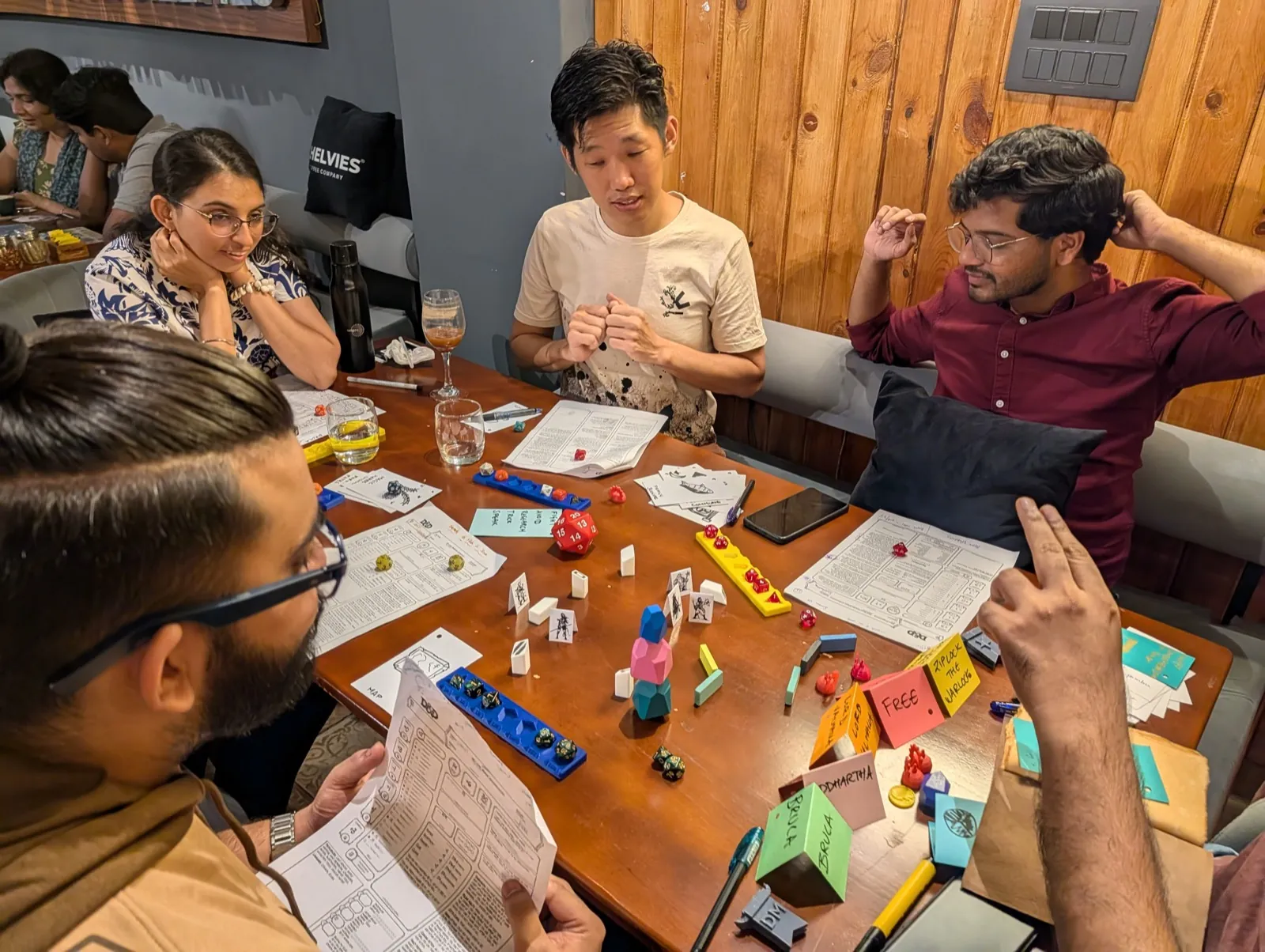
A serious game is not a coat of paint on the content. It is the content. The simulation is the lesson - a live system built so that real constraints, thin resources and other people's choices drag your actual behaviour into the open.
In Welcome to Zombiepuram or Bloom, nobody answers a question about negotiation. They negotiate. Badly, sometimes, and in front of colleagues. Under a clock, with half the information, against people who want something else. What comes out is not the polished version anyone performs for a facilitator. It is the real pattern, the one they have been running for years without noticing.
That is the whole distinction. Gamification asks "did you engage with the material?" A simulation asks "so what did you actually do when it cost you something?"
The facilitation difference
Gamification runs itself. The system tracks you, nobody needs to be in the room, and that is genuinely one of its best features. It is also exactly why it cannot develop a leader.
I design and run every session myself. I have thought about licensing it out, obviously - it would be a much better business. But the debrief is where behaviour actually changes, and a debrief only works if the person leading it was standing there watching. Which team quietly dodged the difficult conversation. Which leader pushed through the discomfort anyway. Which participant went fully compliant the second the stakes rose. A platform cannot see any of that, and a facilitator who arrived afterwards cannot say it with a straight face.
So when I run a debrief, I am not reciting what the game is meant to teach. I am telling that specific room what I watched them do, in the exact moment they did it. Specificity is the only reason it lands instead of sliding off.
 The bottom line
Keep gamification for content that has to be consumed and retained by everybody - compliance, product knowledge, onboarding. It is the right tool for engagement and it is not going anywhere.
Bring in a serious game when the goal is behaviour. When you need leaders to operate differently under pressure, not simply prove they have read about operating differently under pressure. When the question stops being "did they complete it" and becomes "do they lead differently now?"
If your problem is behavioural - how they collaborate, how they influence, how they decide when nothing is clear, how they hold each other to account - then a serious game is not gamification with a bigger budget. It is a different tool for a different job. That is the entire argument, and it fits on a napkin.
Common Questions
Are serious games just expensive gamification?
No. Gamification bolts points, badges and leaderboards onto content you already have, so that people will finally look at it. A serious game throws the content out and hands you a simulation instead, where the learning comes from what you did and what it cost you. Different mechanism, not a fancier delivery van.
Can we use gamification and serious games together?
Yes, and you probably should. They do different jobs. Gamification is very good at reinforcement at scale - compliance completion, habit-building, a sales contest that gets the calls made. A simulation is for the messy human stuff: collaboration, negotiation, deciding when nobody has the full picture. Points and leaderboards cannot see any of that.
Is gamification always bad for leadership development?
Not at all. I have no quarrel with gamification. The damage comes from treating the two as the same thing and buying the wrong one - a leaderboard where you needed a simulation, and then a year later wondering why nobody leads any differently. Gamification is for content at scale. Serious games are for behaviour.

Related reading
- Serious games for leadership development: the complete guide
- Decision Labs: turning game decisions into behavioural data
- Custom serious game design for your context
With love from Bengaluru, this is Arvindh saying over and out.